How to Budget for a Soils Report in San Diego County: 7-Step Guide 2025
Outcome: Learn to accurately estimate and budget for a soils report in San Diego County, typically costing $2,500 to $8,000, within a 2-4 week planning window. Skill level: Beginner to intermediate—no engineering background required, just organizational follow-through.
A soils report, also called a geotechnical report, evaluates soil composition, bearing capacity, and stability for construction projects. San Diego County requires these reports for most new builds, additions over 500 square feet, and any construction on slopes exceeding 15%, according to the San Diego County Planning & Development Services (2024).
Before You Begin: Prerequisites Checklist
- ✅ Property address and parcel number (APN)
- ✅ Basic project scope (new construction, addition, ADU, pool, retaining wall)
- ✅ Site access confirmed (no locked gates, cleared vegetation if possible)
- ✅ Budget range set: $2,500–$8,000 for standard reports; $8,000–$15,000+ for complex hillside sites
- ✅ Timeline expectation: 2-4 weeks from booking to final report delivery
Step 1: Determine If Your Project Requires a Soils Report

Check with the San Diego County Building Division before hiring anyone. Projects requiring reports include:
- New single-family homes (100% of cases)
- Additions exceeding 500 sq ft (required in most jurisdictions)
- Structures on slopes over 15% grade
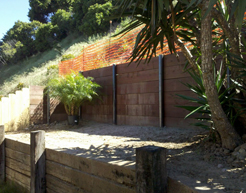
- Retaining walls over 4 feet tall
- Properties in liquefaction or landslide zones (per county GIS maps)
Sub-step: Pull your property’s geological hazard designation from the county’s online GIS portal—this affects report complexity and cost.
Step 2: Identify the Report Type Needed
Two primary categories exist:
- Basic soils report ($2,500–$4,500): Standard bearing capacity testing for flat, stable lots.
- Full geotechnical investigation ($5,000–$8,000+): Required for slopes, expansive soils, or seismic zones. Includes slope stability analysis and liquefaction assessment.
Unlike basic reports, full geotechnical investigations require multiple boring locations and can add 3-5 business days to completion time.
Step 3: Request Quotes from Licensed Geotechnical Engineers
Contact at least three California-licensed geotechnical engineering firms. Request itemized quotes covering:
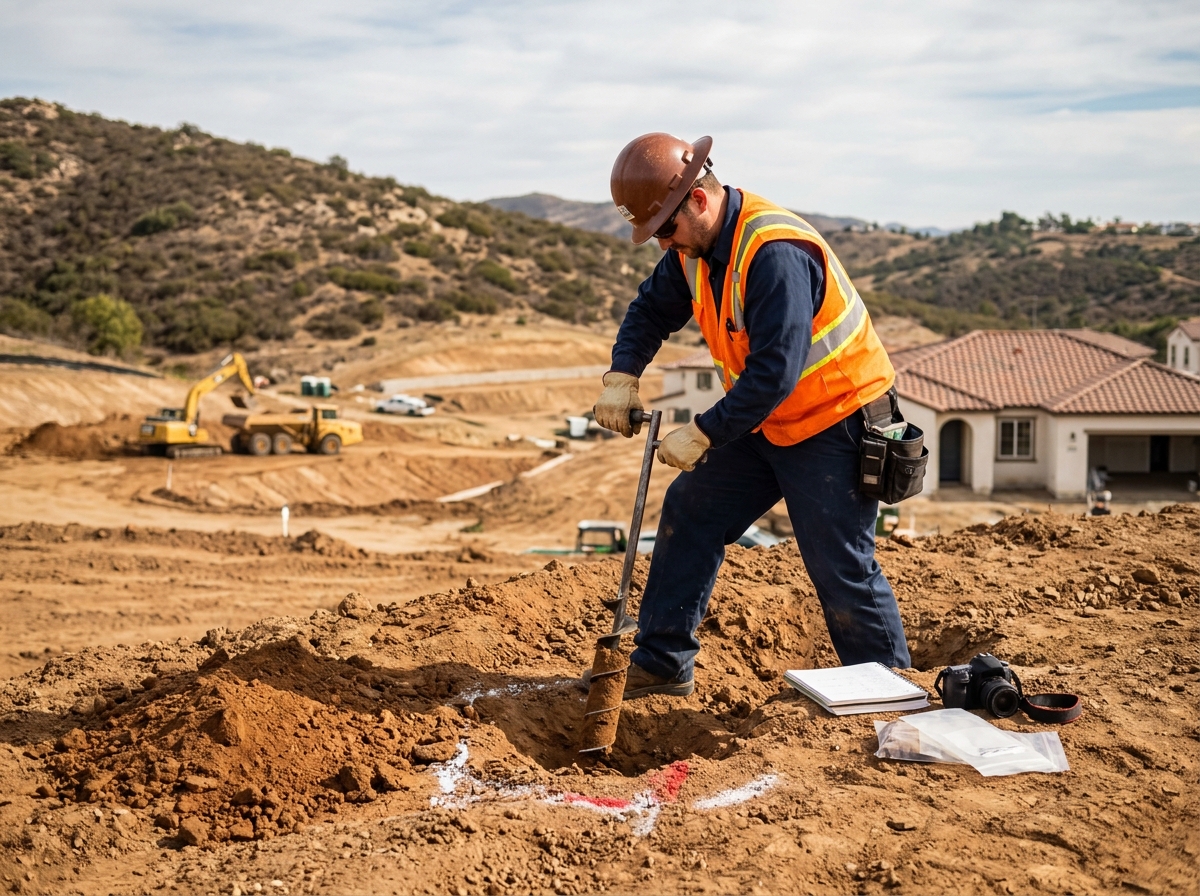
- Field investigation (soil borings or test pits)
- Laboratory testing (soil classification, expansion index)
- Engineering analysis and report writing
- Site visit and drilling equipment mobilization
Sub-step: Ask specifically about drilling access fees—steep or remote lots often add $500–$1,500 in equipment mobilization costs. For transparent, competitive pricing on soils report cost San Diego projects, request itemized breakdowns before signing any contract.
Step 4: Understand the Key Cost Factors
Five variables drive final pricing:
- Site accessibility: Difficult terrain adds 15-25% to base cost
- Lot size: Larger properties require more boring locations
- Soil complexity: Expansive clay soils need additional lab tests ($200–$400 each)
- Slope grade: Steeper slopes require specialized stability analysis
- Turnaround time: Rush reports (under 10 business days) can add 20-30% premium
Step 5: Budget for Additional Testing

Some projects require supplementary tests beyond standard soils analysis:
- Percolation testing for septic systems: $800–$1,500
- Seismic hazard assessment: $1,000–$2,500
- Expansive soil index testing: $300–$600 per sample
Sub-step: Ask your engineer upfront if these tests apply to your project to avoid mid-process surprises.
Step 6: Schedule Fieldwork and Prepare Your Site
Once you select an engineer, schedule the field investigation. Fieldwork typically takes 1-2 days.
- Clear vegetation and debris from proposed boring locations
- Mark utility lines (call 811 at least 2 business days before drilling)
- Ensure drilling equipment access via driveway or gate
Step 7: Review the Final Report and Submit to the County
Reports typically arrive 2-3 weeks after fieldwork completion. Review for:
- Recommended foundation type
- Soil bearing capacity (measured in pounds per square foot)
- Any required soil remediation or engineering conditions
Submit the final stamped report with your building permit application through the county’s online portal.
Troubleshooting Common Issues
| Problem | Solution |
|---|---|
| Quote seems unusually low | Verify the firm is licensed by the California Board for Professional Engineers—unlicensed reports will be rejected by the county. |
| Site inaccessible for drilling equipment | Request hand-auger testing as an alternative; adds $300–$600 but avoids equipment mobilization fees. |
| Report rejected by county reviewer | Request revisions from your engineer within the original contract—most firms include one free revision. |
| Timeline exceeds 4 weeks | Confirm lab testing hasn’t been delayed; request weekly status updates from your engineering firm. |
| Cost exceeds initial quote | Request an itemized change order explaining additional testing or site conditions discovered. |
Next Steps
After receiving your approved soils report, proceed to:
- Submit your building permit application with the stamped report attached
- Share the report with your structural engineer for foundation design
- Retain a copy for future property disclosures if selling the home
Budgeting accurately for a soils report prevents costly project delays. According to the California Department of General Services (2024), permit rejections due to missing or inadequate geotechnical documentation remain a top cause of construction timeline overruns statewide.