What’s the Difference Between Auger Drilling and Rotary Drilling? A Complete Comparison of Drilling Methods
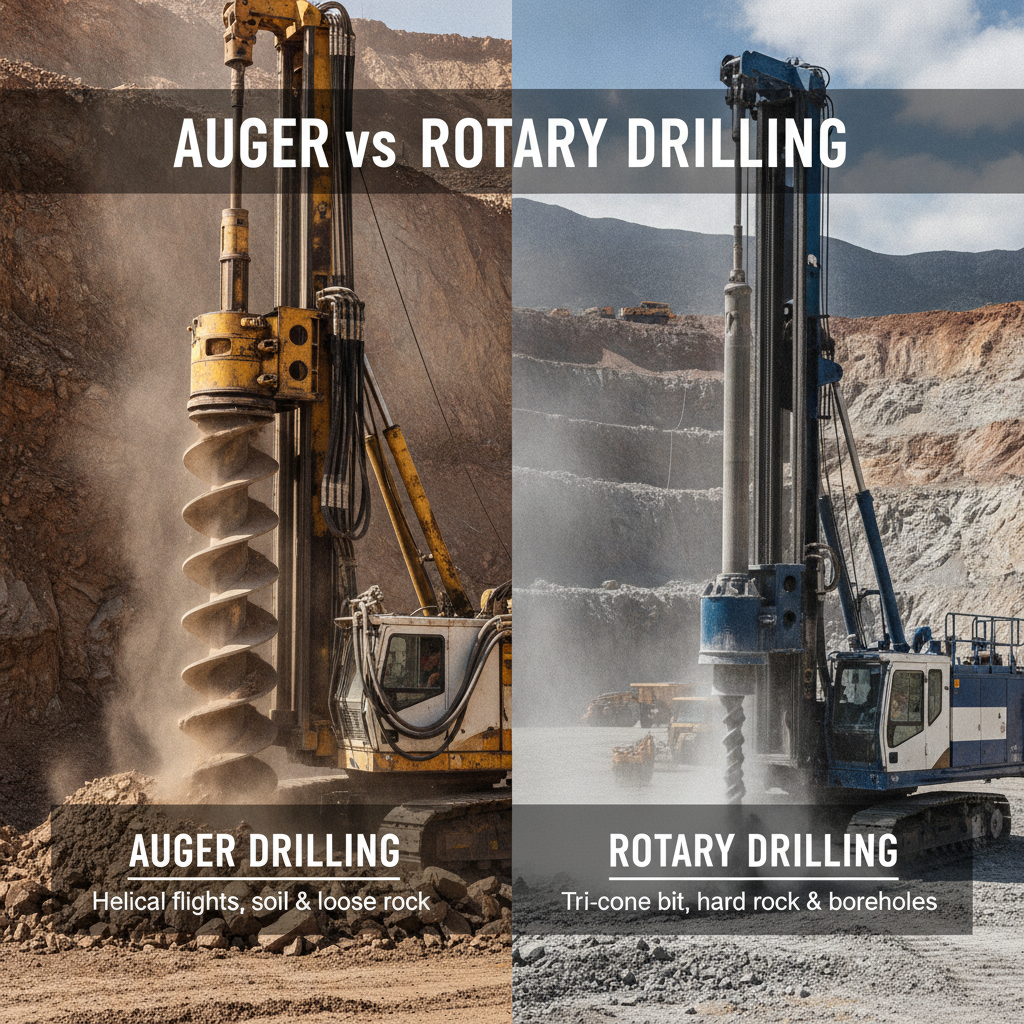
ger drilling is a mechanical drilling method that uses a helical screw blade (auger) to penetrate soil and extract material through rotation and direct lifting, while rotary drilling is a drilling technique that uses a rotating drill bit with circulating fluid (drilling mud or air) to crush rock and transport cuttings to the surface. The fundamental difference lies in the drilling mechanics: auger drilling physically removes soil through a screw conveyor action, whereas rotary drilling grinds material while using drilling fluid for cuttings removal. According to the International Association of Foundation Drilling (2024), these two drilling methods account for approximately 75% of all geotechnical investigation and foundation drilling operations in North America.
Why the Distinction Between Auger and Rotary Drilling Matters

Understanding drilling methods comparison is essential for drilling contractors, geotechnical engineers, and project managers. The choice between auger drilling vs rotary drilling directly impacts project costs, drilling efficiency, sample quality, and borehole stability. Environmental drilling, water well installation, and geotechnical drilling projects require specific drilling techniques matched to subsurface conditions. According to the American Society of Civil Engineers (2023), improper drilling method selection increases project costs by 15-30% and compromises soil sampling accuracy. The drilling equipment, penetration rate, and drilling depth capacity vary significantly between these earth drilling systems.
Key Characteristics of Auger Drilling

Auger drilling equipment operates through direct mechanical action without requiring drilling fluid or circulation system components. The primary characteristics include:
- Mechanical Soil Extraction: Hollow stem auger, solid stem auger, continuous flight auger, and bucket auger designs physically lift soil formation materials through helical flights rotating at 30-60 RPM.
- Self-Supporting Boreholes: The auger barrel maintains borehole stability in unconsolidated soil and overburden without casing requirements during drilling operations.
- Direct Sampling Capability: Hollow stem auger drilling allows SPT sampler and core sampling tools to advance through the center while auger flights support the bore hole walls.
- Limited Depth Capacity: Typical drilling depth ranges from 15-150 feet depending on soil conditions, with torque limitations restricting advancement in consolidated soil and bedrock.
- Simplified Equipment Requirements: Truck mounted drilling rigs with power auger drilling systems require minimal drilling system components compared to rotary drilling rigs.
Key Characteristics of Rotary Drilling
Rotary drilling utilizes rotation combined with hydraulic pressure and fluid circulation to penetrate various formation types. According to the National Ground Water Association (2024), rotary drilling achieves depths exceeding 1,000 feet in appropriate ground conditions. The distinguishing characteristics include:
- Fluid-Assisted Cutting Removal: Drilling mud or compressed air circulates through drill pipe and drill string to transport cuttings from the drill bit to surface while maintaining borehole creation stability.
- Rock Penetration Capability: Tricone bit and PDC bit designs crush rock formation materials through rotation and downward pressure applied via the kelly bar and rotary table or top drive system.
- Continuous Circulation: The circulation system maintains constant drilling fluid flow, providing borehole stability, bit cooling, and hydraulic pressure for efficient ground penetration.
- Depth Versatility: Rotary wash drilling, mud rotary method, and air rotary method techniques enable deep well drilling ranging from shallow well drilling (50-200 feet) to deep well drilling (500+ feet).
- Formation Adaptability: Direct rotary drilling and reverse rotary drilling configurations accommodate varying drilling parameters across diverse subsurface conditions.
How Auger Drilling Works: The Augering Process
The augering process follows a systematic sequence optimized for soil boring techniques:
- Equipment Setup: Track mounted drilling or portable drilling rigs position over the drilling location with continuous flight auger or hollow stem auger assembled to required diameter (4-36 inches).
- Initial Penetration: The drilling rig applies rotational torque through hydraulic motors while maintaining downward pressure for soil penetration and hole advancement.
- Soil Extraction: Helical flights convey soil upward as the auger rotates, depositing cuttings at the surface for soil investigation and formation characteristics analysis.
- Depth Advancement: Additional auger sections connect as drilling progresses, with hand auger drilling for shallow depths or power auger drilling for deeper boring methods requirements.
- Sampling Operations: In hollow stem auger drilling, the center plug removes to insert SPT sampler or core sampling tools for geotechnical investigation without collapsing the borehole.
How Rotary Drilling Works: Rotational Drilling Mechanics
Rotary drilling methodology encompasses several operational phases:
- Rig Preparation: Drilling rig types including truck mounted drilling units establish circulation system connections between mud pumps, drill string, and return flow channels.
- Bit Selection: Drilling tool selection matches formation types—tricone bit for mixed formations, PDC bit for soft to medium rock drilling, or DTH drilling hammers for hard rock drilling applications.
- Circulation Initiation: Drilling fluid pumps through drill pipe interior, exits at the drill bit, and returns through the annular space carrying rock cuttings and formation chips.
- Rotary Advancement: The rotary table or top drive system rotates the drill string at 60-120 RPM while applying weight-on-bit for mechanical drilling action and borehole creation.
- Depth Progression: Additional drill pipe sections add at surface as the pilot hole drilling advances, with drilling efficiency factors monitored through penetration rate measurements.
Auger Drilling vs Rotary Drilling: Direct Comparison
| Factor | Auger Drilling | Rotary Drilling |
|---|---|---|
| Typical Depth Capacity | 15-150 feet in soil conditions | 50-1,000+ feet in soil and rock |
| Formation Suitability | Unconsolidated soil, overburden, soft formations | Consolidated soil, bedrock, rock formation, all ground conditions |
| Drilling Speed | 10-30 feet/hour in suitable soil types | 5-50 feet/hour depending on formation characteristics |
| Equipment Costs | $50,000-$300,000 for drilling equipment | $150,000-$1,000,000+ for complete drilling rig |
| Operating Costs | Lower: minimal consumables, no drilling fluid | Higher: drilling mud, water, fuel, disposal costs |
| Sample Quality | Excellent for soil sampling methods | Good but disturbed due to drilling fluid circulation |
| Borehole Diameter | 4-36 inches (small diameter drilling to large diameter drilling) | 4-48+ inches depending on drilling rig types |
| Primary Applications | Geotechnical investigation, environmental drilling, foundation drilling methods, shallow monitoring wells | Water well drilling methods, oil and gas drilling, geothermal drilling, mineral exploration, deep foundation drilling |
For comprehensive guidance on choosing between auger vs rotary drilling for your specific project requirements, understanding site investigation techniques and subsurface exploration methods proves essential.
Common Misconceptions About Auger and Rotary Drilling
Myth: Auger drilling is always faster than rotary drilling.
Reality: While auger drilling achieves higher penetration rates in unconsolidated soil (15-30 feet/hour), rotary drilling with air rotary method in soft rock can match or exceed this drilling performance. According to the Association of Drilling Contractors International (2023), drilling speed comparison depends entirely on formation types and drilling parameters.
Myth: Rotary drilling cannot produce quality soil samples.
Reality: Although rotary drilling disturbs samples more than continuous flight auger methods, specialized core sampling techniques and direct push technology adaptations in rotary systems provide acceptable sample quality for many subsurface exploration methods.
Myth: Auger drilling works in all soil conditions.
Reality: Auger drilling effectiveness decreases significantly in consolidated soil, weathered bedrock, and formations containing boulders or cobbles. These drilling challenges often necessitate transitioning to rotary percussion drilling or cable tool drilling methods.
Myth: The cost difference between auger and rotary drilling is negligible.
Reality: Initial drilling equipment costs, drilling operating costs, and drilling maintenance requirements differ substantially. Auger drilling typically costs 40-60% less for shallow applications, while rotary drilling becomes more economical for deep well drilling exceeding 150 feet.
Practical Applications: When to Use Each Drilling Method
Optimal Auger Drilling Applications
Bucket auger drilling and hollow stem auger drilling excel in specific scenarios:
- Environmental Drilling: Monitoring well installation in unconsolidated formations where contamination prevention and sample integrity are priorities
- Foundation Drilling: Pre-drilling and pilot hole drilling for caisson installation, helical pile placement, and soil investigation requirements
- Geotechnical Investigation: Site investigation techniques requiring undisturbed SPT sampler collection in soil formation layers
- Shallow Applications: Projects with drilling depth requirements under 100 feet in favorable ground conditions
Optimal Rotary Drilling Applications
Mud rotary method and air rotary method provide advantages for:
- Water Well Drilling: Vertical drilling through multiple formation characteristics to reach productive aquifers at 200-800 feet depths
- Geothermal Drilling: Deep well drilling requiring borehole stability and rock drilling capabilities in consolidated formations
- Foundation Drilling Methods: Large diameter drilling for bridge foundations, building caissons, and infrastructure requiring penetration through bedrock
- Mineral Exploration: Core drilling through rock formation for geological assessment and resource evaluation
Selection Criteria: Choosing Between Auger and Rotary Drilling
The drilling strategy decision depends on several factors affecting choice between auger and rotary drilling:
Subsurface Conditions: Geotechnical drilling methods selection begins with ground investigation results. Auger drilling suits unconsolidated soil and overburden, while rotary drilling handles consolidated soil, bedrock, and mixed formation types.
Project Specifications: Drilling objectives including required drilling depth capacity, diameter, and drilling capacity determine equipment selection. According to the Deep Foundations Institute (2024), projects requiring depths exceeding 120 feet or rock penetration typically mandate rotary drilling technology.
Budget Constraints: Cost analysis must evaluate both drilling equipment types acquisition and operational differences. Auger drilling provides lower entry costs and drilling cost comparison advantages for soil boring techniques, while rotary drilling offers superior drilling effectiveness in challenging formations.
Sample Requirements: Soil sampling methods and core sampling quality expectations influence drilling technique selection. Hollow stem auger drilling provides superior sample quality for geotechnical drilling, while rotary drilling produces acceptable samples when specialized techniques are employed.
Site Accessibility: Portable drilling rigs using auger drilling accommodate restricted access locations, whereas larger rotary drilling rigs require substantial clearance and stable ground conditions for drilling rig types deployment.
Understanding what is the difference between auger and rotary drilling enables informed decisions for drilling contractors and project managers. Both drilling methods offer distinct advantages of auger drilling over rotary drilling and advantages of rotary drilling over auger drilling depending on application suitability, formation characteristics, and drilling requirements. Technological advances continue improving drilling efficiency factors and drilling capabilities for both earth drilling systems, making proper drilling selection increasingly critical for project success.