What Are Helical Piers? Deep Foundation Solutions for Unstable Soil Conditions
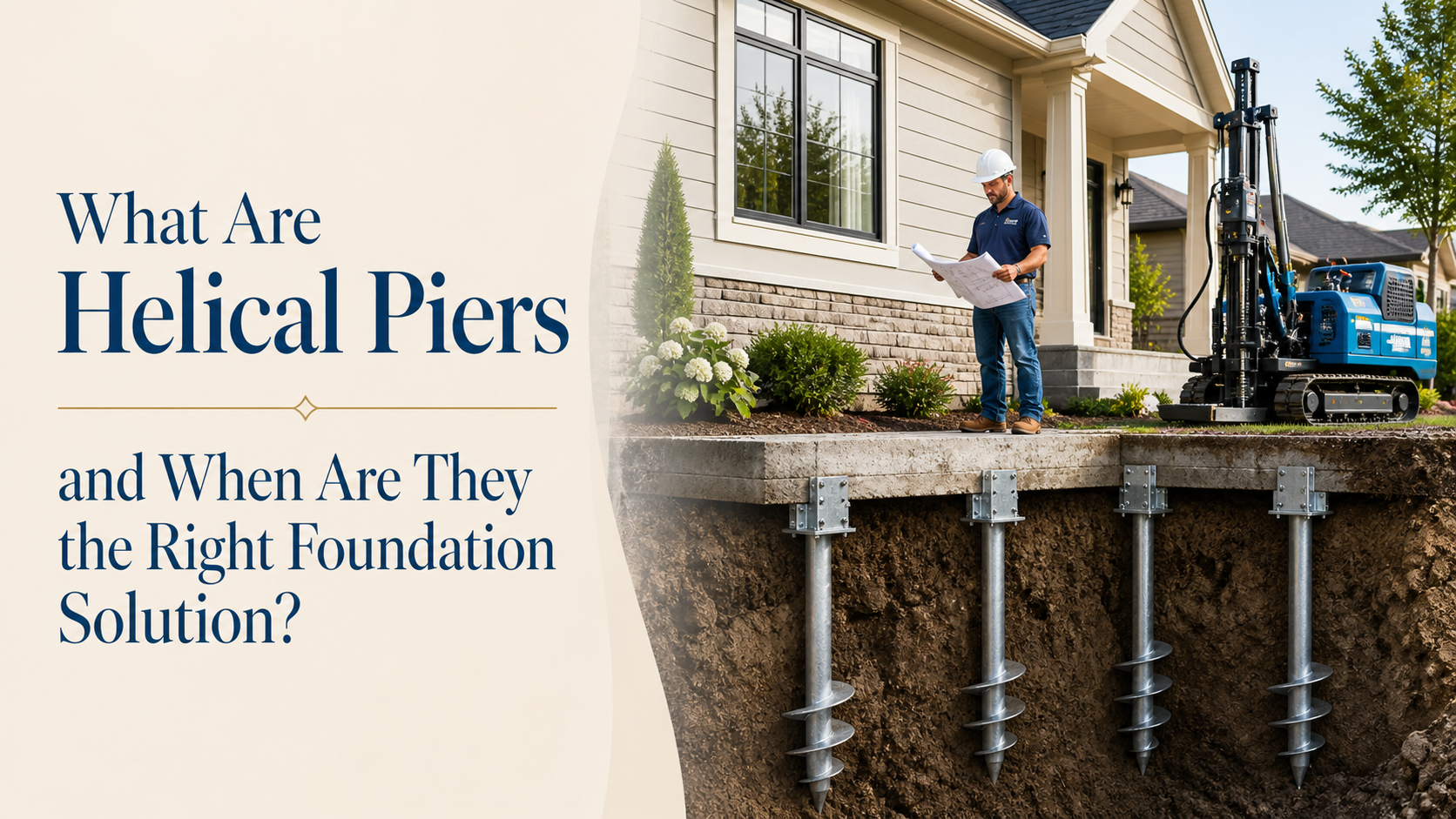
Helical piers are steel shaft foundation systems with helical plates (spiral-shaped bearing plates) that screw into the ground to transfer structural loads from unstable surface soil to deeper, load-bearing strata. According to ICC-ES (International Code Council Evaluation Service) standards, helical piles provide permanent foundation stabilization for both new construction and foundation repair applications in poor soil conditions where traditional shallow foundation systems fail.
Understanding Helical Pier Technology and Foundation Support Systems

Helical pier foundation systems represent a proven deep foundation solution originally developed by AB Chance Company in 1969 for utility pole anchoring. These screw anchor foundation devices consist of a central steel shaft ranging from 1.5 to 3.5 inches in diameter with one or more helical bearing plates welded along the shaft length. Modern applications by manufacturers like CHANCE Civil Construction and Magnum Piering have expanded helical anchor systems to structural foundation repair, basement stabilization, and commercial building foundation support.
The fundamental principle behind ground screw technology involves mechanical soil penetration system installation using hydraulic drive heads that rotate the steel shaft into the ground. Installation torque directly correlates to load-bearing capacity, providing real-time verification of soil bearing capacity during the pier installation process. This torque-based installation method distinguishes helical foundation piers from driven pile or drilled shaft alternatives that rely on post-installation testing.
Key Characteristics of Helical Pile Systems

Five defining traits characterize helical piers as a structural support piling solution:
- Load Transfer Mechanism: Helical plates create bearing surfaces in competent soil layers, transferring compression application loads or tension application forces through the steel shaft to stable bearing strata below expansive clay or soft soil.
- Installation Verification: Hydraulic drive head torque measurements (typically 1,500 to 7,000 foot-pounds) provide immediate confirmation of load-bearing foundation capacity, unlike concrete piers requiring cure time and separate testing.
- Modular Construction: Threaded foundation pile sections connect with couplers, allowing pier depth adjustment from 10 to 80+ feet to reach bedrock or suitable soil bearing improvement depths based on geotechnical investigation findings.
- Galvanized Steel Composition: Corrosion resistance through hot-dip galvanization ensures 50+ year service life in most soil conditions, including high water table environments where concrete foundation deterioration accelerates.
- Minimal Excavation Foundation: Quick installation foundation methods require only enough access for hydraulic equipment, preserving landscaping and enabling all-weather installation compared to extensive excavation for caisson foundation or spread footing systems.
How Helical Piers Work: Installation Process and Soil Anchoring
The helical pier installation process follows a systematic sequence that structural engineers and foundation contractors execute with specialized equipment:
Step 1: Geotechnical Investigation and Soil Testing Methods
Before foundation piering method selection, a geotechnical engineer conducts soil testing methods, including standard penetration tests and soil boring analysis. The geotechnical report for helical piers identifies soil bearing capacity at various depths, expansive soil characteristics, and the presence of bedrock. This bearing capacity analysis determines the required pier depth and helical plate configurations.
Step 2: Pier Bracket Attachment and Structural Connection
Foundation contractors excavate minimal soil around the existing concrete foundation or slab foundation to expose the foundation perimeter. Pier brackets attach to the foundation footing or grade beam, creating the structural connection point where the helical anchor system will support the building load. For foundation underpinning applications, this occurs at strategic intervals determined by a structural engineer’s helical pier design.
Step 3: Hydraulic Installation and Torque Monitoring
Operators position the hydraulic drive head against the first helical pile section and begin rotation. As the spiral pier technology advances into the ground, technicians monitor installation torque continuously. The torque requirements for helical pier installation increase as helical plates engage denser soil layers. When torque readings reach specified levels (verified through torque-based installation charts correlating to soil mechanics data), operators confirm adequate load-bearing capacity.
Step 4: Extension and Depth Achievement
If the first section doesn’t reach target depth or torque, crews add extension sections using bolted couplers. This adjustable foundation system approach continues until pier depth requirements are met, typically when helical plates anchor in soil with bearing capacity exceeding 2,000 pounds per square foot or reach refusal against bedrock.
Step 5: Load Transfer and Foundation Lifting
Once all helical piers for a foundation section are installed, hydraulic jacks placed on pier brackets simultaneously lift the foundation settlement areas. This foundation leveling process raises the structure incrementally while monitoring for structural damage repair requirements. The building’s weight transfers from unstable ground support to the deep foundation solution permanently.
Common Misconceptions About Screw Pile Foundations
Myth: Helical Piers Are Only Temporary Foundation Fixes
Reality: According to building codes and ICC-ES-approved helical pier systems certifications, properly installed helical piers provide permanent foundation fix solutions with a 50+ year design life. Unlike temporary stabilization methods such as slab jacking or mudjacking that address symptoms, the ground anchoring technique transfers loads to stable soil permanently.
Myth: Helical Piers Cannot Support Heavy Commercial Buildings
Reality: Commercial helical pier applications routinely support loads exceeding 500 tons per pier. The helical pier load capacity calculation depends on pier diameter, helical plate size and quantity, and soil consolidation characteristics. Major manufacturers like CHANCE Civil Construction engineer systems for commercial building foundation and industrial structure requirements.
Myth: Clay Soil Foundation Problems Prevent Helical Pier Use
Reality: Helical piers excel in expansive clay soil because installation advances through unstable clay layers to anchor in stable strata below. The best foundation repair method for clay soil leverages deep foundation types that bypass problematic expansive soil entirely, making helical piers ideal for regions with expansive clay and soil subsidence issues.
Myth: Winter Conditions Prohibit Installation
Reality: Can helical piers be installed in winter? Yes—frozen surface soil doesn’t prevent screw pile installation since the helical anchor penetrates below frost heave depths (typically 4-8 feet). This all-weather installation capability surpasses concrete pier alternatives requiring specific temperature ranges for proper curing.
Helical Piers vs. Alternative Foundation Repair Methods
Helical Piers vs Push Piers Comparison
While both represent deep foundation solutions, push piers (also called resistance piers) are driven into the ground using the structure’s weight as resistance, while helical piers screw into position mechanically. Helical piers vs push piers analysis reveals key differences:
| Feature | Helical Piers | Push Piers |
|---|---|---|
| Installation Method | Rotational torque-based installation | Hydraulic pressure driving |
| Load Verification | Real-time torque correlation | Post-installation load testing |
| Tension Capability | Excellent for lateral loads and tieback anchor installation | Primarily compression applications |
| Soil Suitability | Effective in soft soil, sandy soil foundation, clay soil foundation | Requires adequate soil resistance for installation |
Helical Piers vs Drilled Concrete Piers
Drilled concrete piers (bored pile or caisson foundation) create cylindrical holes filled with concrete and reinforcing steel. Advantages of helical piers over concrete include immediate load transfer (no 28-day cure period), minimal excavation foundation requirements, quick installation foundation completion (hours vs. days), and eco-friendly foundation characteristics (no concrete waste or soil disposal). Disadvantages of helical pier foundations include higher material costs per pier and reliance on specialized certified helical pier installers near me for proper installation equipment operation.
When Are Helical Piers the Right Foundation Solution?
Optimal Soil Conditions for Helical Pier Installation
Helical piers perform best in specific geological scenarios identified through soil mechanics analysis:
- Expansive Clay Environments: When geotechnical reports reveal clay soil with a high plasticity index, causing foundation heaving or foundation sinking cycles
- Weak Soil Conditions: Sites with organic topsoil, fill material, or sandy soil foundation layers over competent bearing strata at depth
- High Water Table: Areas where helical piers for high water table conditions avoid the dewatering requirements necessary for concrete foundation construction
- Variable Soil Layers: Locations with poor soil bearing capacity at shallow depths, but stable soil at 15-40 feet, requiring foundation alternatives to shallow foundation systems
The minimum soil conditions for helical piers require at least one competent bearing layer within economically viable depths (typically under 80 feet). Rocky soil presents challenges, though helical piers in rocky soil can succeed when plates engage fractured rock or overlying competent soil.
Signs You Need Helical Piers for Foundation Repair
Property owners should consider helical foundation piers for deck support, house leveling solution needs, or structural undermining repair when observing:
- Foundation Settlement Patterns: Cracks in foundation walls, basement underpinning requirements, or foundation settlement correction needs indicate unstable ground support
- Structural Damage Indicators: Door/window misalignment, floor slope, or foundation cracks suggest foundation movement requiring foundation stabilization
- Soil-Related Issues: Foundation subsidence repair needs from soil compression, poor soil conditions causing foundation failure, or expansive soil movement cycles
- Structural Load Changes: Planned additions requiring helical piers for additional foundation support or foundation sinking prevention during building modifications
Applications Across Construction Types
Residential Foundation Applications: Helical piers for home foundation repair address basement repair, crawl space stabilization, and slab foundation support. Residential helical pier installation typically uses 2.875-inch to 3.5-inch diameter shafts with load capacities from 20 to 70 kips per pier.
Commercial Foundation Projects: Commercial helical pier applications support warehouses, retail buildings, and light industrial structures. Foundation engineering teams specify larger diameter systems with multiple helical plates for compression applications exceeding 100 kips per pier.
New Construction Foundations: Helical piers for new home construction provide cost-effective foundation repair alternatives in challenging soil conditions. Building stabilization begins during initial construction rather than remedial intervention.
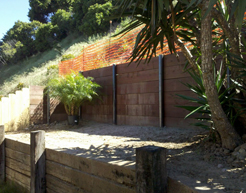
Specialized Applications: Construction technology applications include helical piers for retaining wall support, helical piers for seismic zones providing earthquake-resistant helical pier foundation performance, and helical tieback anchor installation for lateral load helical pier application in excavation shoring.
Technical Specifications and Performance Standards
Load Capacity and Structural Requirements
How much do helical piers cost per foot correlates to capacity specifications? Typical residential foundation systems range from $75 to $150 per installed foot (as of 2025), with total helical pier foundation installation cost between $1,500 and $4,000 per pier, depending on depth and load requirements. Structural integrity restoration projects require foundation engineering calculations verifying adequate safety factors.
Warranty Coverage and Maintenance
Do helical piers require maintenance? Minimal—the galvanized steel construction resists corrosion in most environments. Helical pier warranty coverage typically spans 25 years for residential applications, with some manufacturers offering lifetime transferable warranties. How long do helical piers last? They extend 50+ years in non-aggressive soil chemistry conditions.
Building Code Compliance
Are helical piers a permanent solution per building codes? Yes—helical piers building code requirements reference ICC-ES evaluation reports (ESR) certifying specific systems. Engineers specify only ICC-ES-approved systems in their structural foundation repair designs, ensuring regulatory acceptance for permit applications.
Choosing the Right Foundation Repair Method
How to choose foundation repair method depends on a comprehensive evaluation of soil conditions, structural requirements, budget constraints, and timeline considerations. When comparing foundation repair methods, helical piers offer superior performance in weak soil conditions, provide immediate load verification, and accommodate future adjustments if additional foundation settlement occurs.
For detailed technical specifications and installation guidelines, refer to this comprehensive guide to helical piers addressing site-specific design considerations.
Selecting between helical piers, push pier systems, drilled shaft foundations, or micropile solutions requires professional assessment by qualified geotechnical engineers and structural engineers familiar with local soil mechanics and foundation engineering principles. The investment in proper diagnosis through soil testing before helical pier installation ensures optimal ground improvement outcomes and prevents future foundation failure.