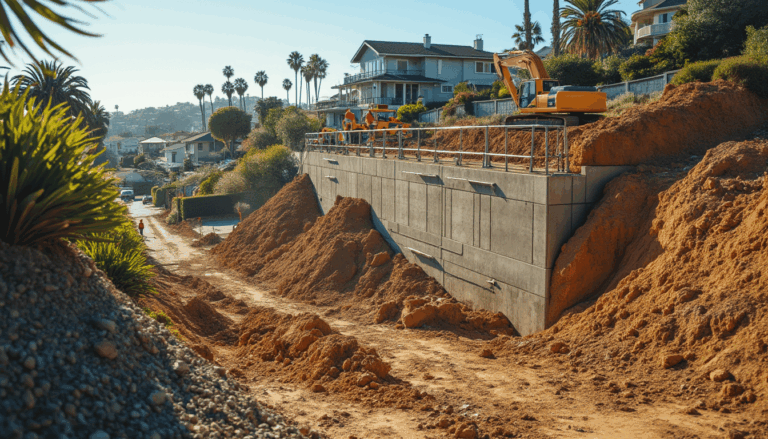
How Do You Know If a Retaining Wall Is Failing? Warning Signs Homeowners Should Watch For
You’re experiencing retaining wall problems if you notice visible cracks, wall tilting forward, water pooling behind the structure, or separated wall blocks. According to the American Society of Civil Engineers (2022), approximately 15% of residential retaining walls develop structural issues within their first decade. Early detection prevents catastrophic wall collapse and costly property damage.
Quick Answer: Six Critical Warning Signs of Retaining Wall Failure

A failing retaining wall typically exhibits one or more of these structural damage indicators:
- Horizontal wall cracks wider than 1/4 inch indicate excessive soil pressure
- Wall leaning forward more than 2 degrees from vertical suggests foundation settling
- Bulging wall face at the bottom signals hydrostatic pressure buildup
- Clogged weep holes causing water retention behind the structure
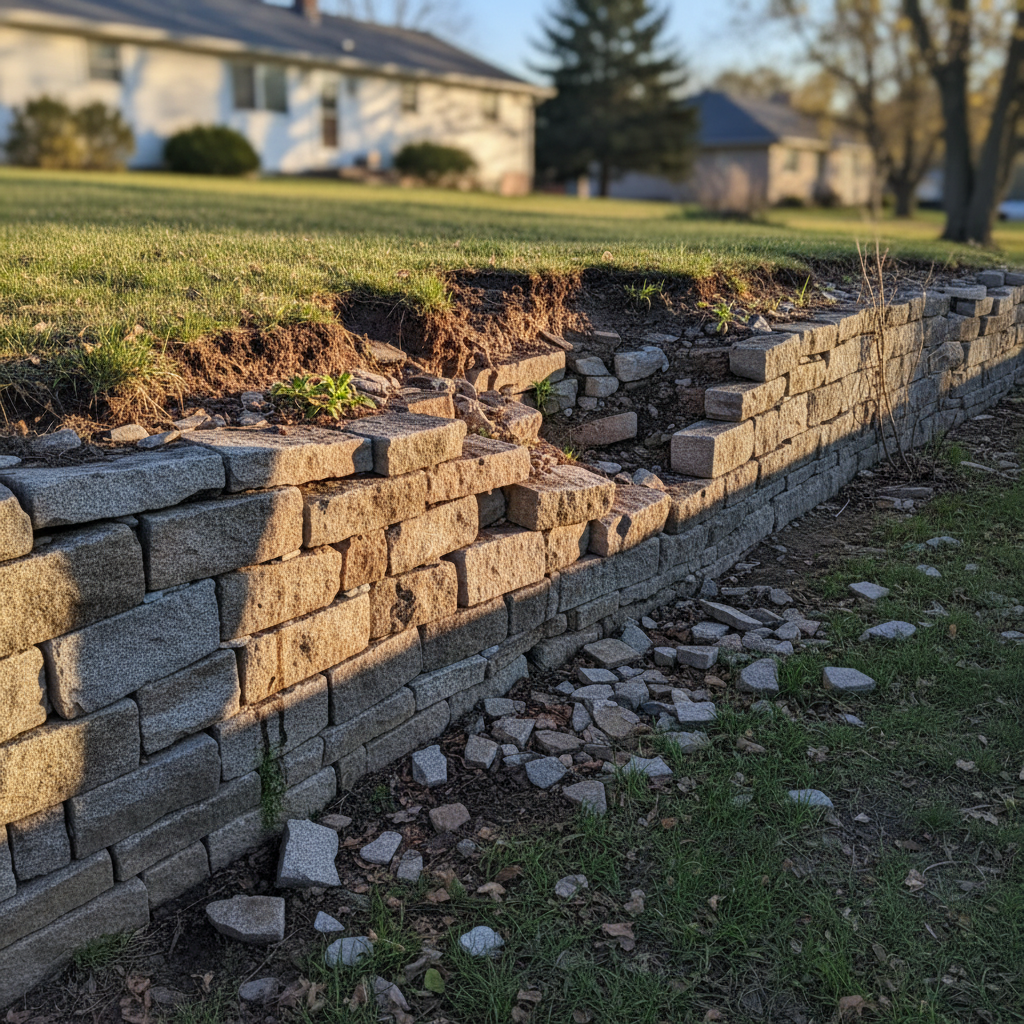
- Separated wall blocks or deteriorating mortar joints between masonry units
- Soil erosion around wall base exposing the foundation or footing
If you observe multiple signs a retaining wall is failing, contact a structural engineer within 48 hours for professional inspection.
Why Retaining Walls Fail: Understanding the Root Causes

Retaining wall failure occurs when structural forces exceed the wall’s load-bearing capacity. Unlike decorative landscape features, retaining walls must resist constant lateral movement from thousands of pounds of soil pressure. Three primary factors compromise wall stability:
Inadequate drainage systems: Water accumulation behind a gravity wall increases hydrostatic pressure by 300-500% (Geotechnical Engineering Research Foundation, 2021). Without proper weep holes and gravel backfill, water weight overwhelms even well-constructed walls.
Poor wall construction or design flaws: Cantilever walls require precise rebar placement and reinforced concrete specifications. According to building codes in most jurisdictions, walls exceeding 4 feet height need engineered designs approved by building inspectors.
Soil conditions and environmental factors: Expansive clay soils, frost heave in freeze-thaw cycles, and tree roots create unpredictable forces. A geotechnical engineer can identify substandard wall design issues before construction begins.
Diagnostic Guide: Detailed Retaining Wall Failure Warning Signs
1. Crack Formation Patterns Tell the Story
Not all retaining wall cracks signal imminent danger. Understanding crack patterns helps homeowners assess severity:
| Crack Type | Location | Severity Level | Likely Cause |
|---|---|---|---|
| Horizontal wall cracks | Mid-height of wall | High – immediate concern | Excessive soil pressure buildup |
| Vertical wall cracks | Near expansion joints | Low – monitor | Normal thermal expansion |
| Diagonal wall cracks | Corner to corner | Medium – assess soon | Foundation settling unevenly |
| Stair-step wall cracks | Through mortar joints | Medium-High | Differential settlement, inadequate support |
What do cracks in retaining wall mean? Horizontal cracks wider than 1/4 inch indicate the wall experiences bending stress beyond design limits. Vertical settlement cracks under 1/8 inch often result from normal material curing and pose minimal structural concerns.
2. Wall Movement and Displacement Issues
Visible wall displacement represents advanced structural distress. Common wall movement patterns include:
Retaining wall tilting forward: When a timber retaining wall or concrete structure leans toward the yard (away from retained soil), the footing has likely failed or soil pressure exceeds capacity. Measure tilt using a level—displacement exceeding 1 inch per 4 feet height requires immediate structural assessment.
Retaining wall bowing in the middle: A bulging wall face, particularly in anchored walls or piling walls, indicates inadequate wall drainage or missing structural ties. This wall bowing typically worsens after heavy rainfall when soil saturation increases lateral forces.
Wall rotation at the base: When the entire structure pivots forward from the bottom, the foundation problems stem from undersized footings or erosion control failure. Unlike vertical displacement, wall rotation threatens complete wall overturning.
Horizontal displacement: Lateral movement away from the original wall alignment suggests the wall is sliding along its base. This wall sliding occurs when friction between the footing and soil cannot resist soil pressure.
3. Drainage Failure and Water Damage Signs
Water management failures cause 60% of retaining wall problems (National Concrete Masonry Association, 2023). Key drainage failure indicators include:
- Water pooling behind retaining wall: Standing water within 6 inches of the wall back indicates clogged drainage systems or insufficient gravel backfill depth
- Clogged weep holes in retaining wall: These drainage openings should remain clear; blockages cause hydrostatic pressure that can crack concrete within weeks
- Water stained wall surfaces: Persistent moisture intrusion creates dark streaks, indicating water seepage through the structure rather than controlled drainage
- Efflorescence formation: White crystalline deposits on masonry surfaces prove water travels through the wall, dissolving minerals and weakening mortar joints
- Drainage backup during storms: If water accumulates faster than the drainage system removes it, the system design is inadequate for local rainfall patterns
Is a leaning retaining wall dangerous? Yes—walls leaning more than 3 degrees from vertical can collapse during heavy rain when water weight compounds soil pressure. Schedule professional inspection within 24 hours if drainage issues accompany visible leaning.
4. Material Degradation and Structural Deterioration
Construction quality directly affects wall lifespan. Watch for these material degradation signs:
Mortar deterioration: Crumbling or missing mortar joints in masonry walls reduce structural integrity by 40% (Masonry Institute of America, 2022). Deteriorating wall materials require repointing before water infiltration accelerates damage.
Block separation: When retaining wall blocks coming loose from adjacent units, the wall loses its monolithic strength. Separated wall blocks often result from freeze-thaw damage in climates experiencing frost heave.
Rusted wall anchors: In anchored wall systems, corroded metal ties cannot transfer loads properly. Rust stains emanating from anchor points signal advanced corrosion requiring replacement.
Broken wall ties: Concrete retaining walls with internal reinforcement depend on these connections. Broken ties manifest as localized bulging or displaced wall sections.
5. Foundation and Base Structural Issues
The foundation determines overall wall stability. Critical foundation problems include:
Retaining wall foundation problems: Insufficient footing depth (minimum 12 inches below frost line) allows frost damage to wall during winter freeze-thaw cycles. Contractors must verify proper footing dimensions match structural engineer specifications.
Retaining wall settling unevenly: Differential settlement creates stress concentrations causing crack formation. A sinking retaining wall on one end while the opposite remains stable indicates poor soil compaction during construction.
Eroding wall base: Exposed footings compromise load-bearing capacity and accelerate foundation settling. Soil erosion around retaining wall base often results from improper yard drainage directing water toward the structure.
6. Soil Erosion and Landscape Stability Indicators
The retained soil’s condition affects wall performance:
- Root damaged wall: Tree roots growing behind or through walls exert expansion forces rivaling soil pressure. Root intrusion commonly affects timber retaining walls and older masonry structures
- Soil saturation evidence: Persistently damp soil behind the wall indicates drainage problems requiring immediate correction
- Slope support failure: Visible soil slumping above the wall or landscape stability changes suggest the wall no longer provides adequate erosion control
- Wall settlement cracks in adjacent structures: Property damage extending to nearby foundations, driveways, or patios proves the failing retaining structure affects surrounding areas
When to Call a Structural Engineer or Geotechnical Specialist
Professional retaining wall inspection becomes essential when homeowners observe:
- Multiple early warning signs occurring simultaneously
- Rapid progression of visible damage over days or weeks
- Wall height exceeding 4 feet with any structural concerns
- Safety hazards threatening people, buildings, or utilities
- Insurance claim requirements for property protection documentation
How to check if retaining wall is stable: A landscape architect or building inspector can perform preliminary assessments, but walls showing active movement require structural assessment from licensed engineers. Professional retaining wall inspection costs range from $300-$800 (2024 rates) but prevent expensive emergency retaining wall repair solutions later.
When is a retaining wall beyond repair? If structural integrity has degraded more than 40%, wall displacement exceeds 6 inches, or the foundation has completely failed, replacement typically costs less than extensive repairs. A structural engineer provides definitive repair versus replace recommendations based on load-bearing capacity testing.
Prevention: Protecting Your Investment Through Maintenance
Proactive wall maintenance extends lifespan and prevents wall failure:
Quarterly DIY retaining wall inspection checklist:
- Clear debris from weep holes and drainage systems
- Document new cracks with photos and measurements
- Verify proper slope away from wall (minimum 2% grade)
- Remove vegetation within 2 feet of the structure
- Check for standing water or soil saturation after rainfall
Annual professional preventive inspection: Contractors specializing in retaining walls should assess drainage function, material condition, and structural movement yearly. This costs $150-$300 but identifies hidden problems before they escalate.
Water management best practices: Install or maintain gutters directing roof runoff away from walls, ensure yard drainage slopes away from retained areas, and verify gravel backfill hasn’t compacted or clogged with sediment.
Address issues promptly: Small repairs—repointing mortar joints, clearing drainage, or stabilizing minor cracks—cost $200-$1,000. Delaying allows problems to compound, potentially requiring full wall reconstruction at $5,000-$25,000.
Take Action: Protecting Your Property From Wall Failure
Recognizing retaining wall failure warning signs for homeowners empowers you to protect your property investment. Start with a systematic inspection today:
Immediate steps (this week):
- Walk your property photographing all retaining walls from multiple angles
- Measure any cracks, noting width, length, and location
- Check drainage function during next rainfall
- Clear vegetation and debris from wall surfaces and drainage areas
If you observe concerning symptoms of retaining wall failure: Contact a structural engineer for evaluation before the problem progresses. Most jurisdictions require permit requirements for walls over 4 feet, ensuring proper construction quality and building codes compliance.
Remember: how serious are retaining wall cracks depends on location, orientation, and progression rate. When uncertain, professional assessment provides peace of mind and prevents catastrophic structural instability. Your safety and property protection justify the modest investment in expert evaluation.