Caisson Drilling and Deep Foundation Engineering: A Comprehensive Guide to Modern Foundation Construction
In the realm of civil engineering and foundation construction, few methods have proven as reliable and versatile as caisson drilling. This sophisticated deep foundation installation technique has revolutionized how we build structures on challenging terrain, from towering skyscrapers to massive bridge foundations. Understanding this critical foundation drilling technique is essential for anyone involved in construction planning, geotechnical engineering, or structural design.
As urban development expands and construction projects become increasingly complex, the demand for robust underground support systems continues to grow. Whether you’re a construction professional, project manager, or property developer, familiarizing yourself with what is caisson drilling and when it’s needed can significantly impact project success and long-term structural integrity. This comprehensive guide will explore every aspect of this essential foundation construction process.
Caisson Drilling Fundamentals in Foundation Engineering

Caisson drilling, also known as drilled shaft or bored pile construction, represents a sophisticated approach to creating deep foundation systems. This method involves excavating cylindrical holes into the earth using specialized drilling equipment, followed by concrete placement and reinforcement cage installation. The resulting structure becomes a permanent foundation element capable of transferring substantial loads from superstructures to stable soil layers or bedrock below.
The drilled shaft foundation process differs fundamentally from traditional pile driving methods. Instead of hammering prefabricated elements into the ground, caisson drilling removes soil through mechanical auger or hydraulic excavation techniques. This approach offers superior control over shaft diameter, depth, and quality, making it the preferred choice for many modern construction projects requiring exceptional load bearing capacity and structural support.
How Does the Drilling and Concreting Process Work?
The foundation construction process begins with precise soil boring to establish ground conditions and determine appropriate shaft dimensions. Drilling rigs equipped with bucket auger, continuous flight auger, or other specialized tools excavate the borehole to specified depths. Throughout this operation, construction safety protocols and OSHA regulations govern every aspect of the work to protect personnel and ensure quality outcomes.
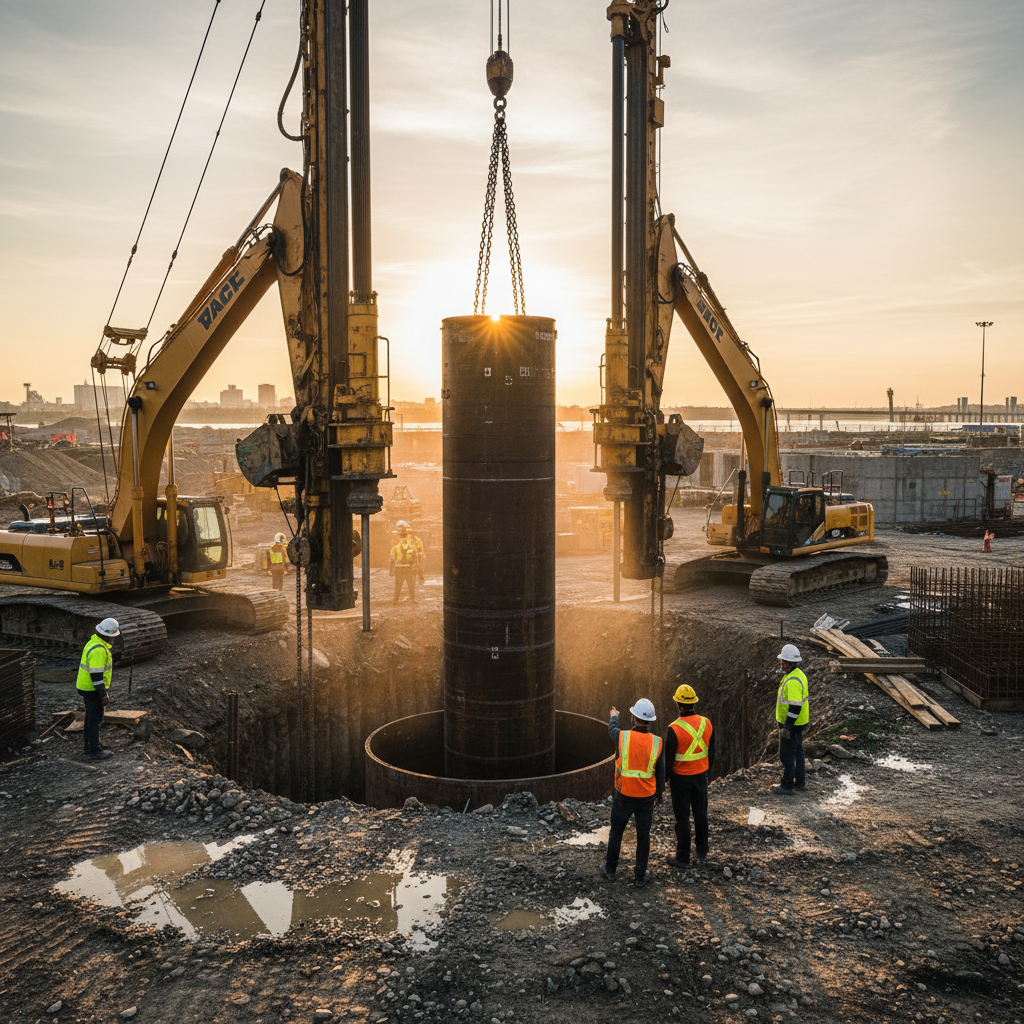
Once the shaft excavation method reaches the required depth and diameter specifications, crews lower a rebar cage into the borehole to provide structural reinforcement. Tremie concrete is then placed from the bottom up, displacing any remaining drilling mud or groundwater while eliminating voids. This concrete filled shaft creates a monolithic foundation pier capable of withstanding tremendous compressive and lateral forces.
Geotechnical Engineering Applications for Drilled Shaft Systems

Drilled shaft foundations serve numerous purposes across diverse construction scenarios. Bridge foundation applications represent perhaps the most visible use, where massive concrete piers must resist both vertical loads and lateral forces from traffic, wind, and seismic activity. These vertical foundation elements extend through unstable surface soils to reach competent bearing strata, ensuring long-term stability for critical infrastructure.
Building foundation systems for high-rise structures increasingly rely on caisson technology to achieve the extraordinary bearing capacity enhancement required for tall buildings. When conventional spread footings cannot adequately distribute structural loads, drilled concrete pier solutions provide reliable alternatives. The method proves particularly valuable in urban environments where vibration-sensitive adjacent structures make traditional pile driving impractical.
When Is Caisson Drilling Required for Your Project?
Determining when to use caisson drilling over other methods requires careful geotechnical analysis and site-specific evaluation. Projects encountering high water table conditions typically benefit from cased drilling techniques that prevent borehole collapse and maintain excavation integrity. The temporary casing or permanent casing systems stabilize surrounding soils during construction, enabling successful concrete placement even in saturated ground conditions.
Soil mechanics considerations also dictate method selection. Sites with variable subsurface conditions, dense layers overlying weak deposits, or significant bedrock depth often necessitate the flexibility that rotary drilling or percussion drilling equipment provides. The ability to socket foundations into rock formations through specialized core barrel operations delivers end bearing and skin friction characteristics unattainable through alternative foundation installation methods.
Drilling Equipment and Machinery for Deep Foundation Technology
Modern pier drilling operations employ sophisticated drilling rig technology designed specifically for deep hole drilling applications. These machines feature kelly bar systems that transmit rotational torque and crowd force to excavation tools while maintaining precise vertical alignment. The equipment’s capabilities directly influence achievable shaft diameter ranges, maximum depth potential, and overall drilling methodology efficiency.
Different soil excavation challenges require specialized tools. Continuous flight auger piles utilize helical drilling elements that remove spoils continuously during penetration, ideal for cohesive soils and moderate depths. Bucket auger systems employ cylindrical cutting tools with bottom-opening buckets, excellent for larger diameter excavations and varied ground improvement technique requirements. Reverse circulation methods leverage fluid dynamics to transport cuttings upward through hollow drill stems, particularly effective in large diameter pile installations.
What Equipment Is Used for Different Soil Conditions?
Selecting appropriate foundation drilling equipment depends on site-specific geotechnical conditions identified during preliminary soil boring investigations. Clay soils generally accommodate mechanical auger systems effectively, while sandy soils may require slurry wall techniques using bentonite or polymer drilling mud for borehole stabilization. Rocky terrain demands specialized rock drilling attachments with tungsten carbide cutting teeth or down-the-hole hammer assemblies.
The table below illustrates common equipment selections based on subsurface conditions:
| Soil Condition | Recommended Equipment | Typical Application | Advantages |
|---|---|---|---|
| Soft Clay | Bucket Auger | Building foundations, retaining walls | Fast penetration, economical |
| Sandy/Granular | CFA with casing | Bridge piers, high water table sites | Prevents collapse, continuous operation |
| Mixed Conditions | Rotary with reverse circulation | Large diameter shafts | Versatile, handles obstructions |
| Rock/Dense Material | Core barrel/rock auger | Socketed piles, bedrock anchorage | Penetrates hard strata, quality sockets |
Concrete Placement and Reinforcement Requirements in Bored Pile Construction
Achieving structural integrity in cast-in-place pile systems demands meticulous attention to concrete mix design and placement procedures. Tremie concrete methods prevent segregation and ensure continuous pour quality by introducing material at the borehole bottom through sealed pipes. This technique displaces groundwater and slurry upward while maintaining homogeneous concrete quality throughout the vertical support structure.
The reinforcement cage serves multiple critical functions within drilled pier method applications. Steel rebar arrangements resist tensile stresses, provide moment resistance for lateral loading, and enhance overall ductility during seismic events. Proper cage fabrication includes appropriate spacing, tie configurations, and concrete cover requirements specified by structural engineers based on load transfer mechanisms and environmental exposure conditions.
Why Is Quality Control Critical During Concrete Shaft Construction?
Foundation quality control measures directly impact long-term performance and structural safety. Inspection methods include visual verification of excavation depth and cleanliness, caliper logging to confirm shaft diameter consistency, and concrete testing to validate mix properties. Advanced non-destructive evaluation techniques such as cross-hole sonic logging or thermal integrity profiling detect anomalies that could compromise load bearing capacity or durability.
Common quality issues in pier foundation construction stem from inadequate borehole cleaning, premature concrete setting, reinforcement displacement, or necking caused by unstable soils. Implementing comprehensive quality assurance protocols throughout foundation construction technique execution prevents these deficiencies. Documentation requirements typically include detailed boring logs, concrete batch records, placement monitoring data, and post-installation testing results for engineering verification.
Advantages of Caisson Drilling Method Over Alternative Foundation Systems
The benefits of deep foundation installation through drilled methods extend beyond mere structural performance. Noise and vibration reduction represent significant advantages in urban environments where adjacent structures, utilities, and occupied buildings require protection. Unlike impact pile driving that generates substantial ground disturbance, auger drilling and bucket excavation proceed relatively quietly, minimizing disruption to surrounding areas and maintaining community relations.
Adaptability to varying subsurface construction conditions provides another compelling reason for selecting this foundation engineering solution. Contractors can adjust shaft dimensions, penetration depths, and construction sequences based on encountered conditions without extensive equipment changes. This flexibility proves invaluable when geotechnical investigations reveal unexpected soil layers or when design modifications become necessary during construction to optimize bearing capacity enhancement.
What Are the Cost Considerations and Project Timeline Impacts?
Economic analysis of foundation support systems must consider both direct installation costs and indirect project impacts. While equipment rental costs and specialized labor requirements may initially appear higher than alternative methods, the elimination of vibration damage risks, reduced noise mitigation expenses, and faster installation rates often yield favorable overall project economics. Large diameter pile foundations can replace multiple smaller elements, reducing total foundation count and simplifying superstructure connections.
Construction timeline advantages emerge from the method’s weather resistance and logistical efficiency. Once mobilized, modern drilling rig operations can proceed through varied soil boring technique challenges without significant delays. The cast-in-drilled-hole pile approach eliminates waiting periods for driven pile delivery, reduces material handling requirements, and allows immediate transition to superstructure construction upon concrete curing, compressing overall project schedules considerably.
Disadvantages and Limitations of Foundation Support Drilling
Despite numerous advantages, certain conditions limit the applicability of drilled foundation systems. Extremely soft or loose soils may prevent maintaining open excavations even with temporary steel casing support. Sites with significant cobbles, boulders, or obstructions can dramatically slow penetration rates and increase drilling equipment wear, potentially making alternative deep foundation technology more practical and economical.
Groundwater control presents another potential challenge in subsurface drilling method applications. While slurry drilling techniques effectively stabilize water-bearing formations during excavation, maintaining dry conditions for inspection or installing permanent instrumentation may prove difficult. Marine environments or sites with aggressive chemical groundwater conditions require additional protective measures such as specialized concrete mix designs or corrosion-resistant reinforcement materials that increase overall costs.
How Do Weather and Environmental Factors Affect Operations?
Environmental considerations influence both construction feasibility and regulatory compliance in foundation bore method projects. Slurry management requires proper handling, storage, and disposal of drilling mud containing bentonite or synthetic polymers. Regulatory agencies increasingly scrutinize these materials to prevent environmental contamination, necessitating comprehensive management plans and sometimes increasing project costs through specialized treatment requirements.
Extreme weather conditions affect drilling and concreting operations differently than prefabricated foundation alternatives. Cold temperatures require concrete admixtures and curing precautions to prevent freeze damage, while excessive heat demands measures to control setting rates and prevent thermal cracking. Heavy rainfall can overwhelm dewatering systems, flood excavations, and contaminate fresh concrete placements, potentially requiring remedial work or complete shaft replacement in severe cases.
Load Transfer Mechanisms and Structural Support Principles
Understanding how drilled shafts resist applied loads is fundamental to proper foundation design specifications. End bearing resistance develops when the shaft base rests on competent rock or dense soil layers capable of supporting concentrated pressures. Socketing into bedrock through specialized drilling operations creates particularly effective end bearing conditions, with rough socket walls providing mechanical interlock that enhances capacity beyond simple bearing area calculations.
Skin friction along the shaft perimeter contributes significantly to total foundation support capacity, particularly in deep installations through cohesive soils. This load transfer mechanism develops as surface roughness, soil adhesion, and normal stresses create shear resistance between the concrete surface and surrounding earth. Foundation engineering analysis must accurately evaluate both components to ensure adequate safety factors and optimize shaft dimensions for economic design solutions.
What Factors Determine Load-Bearing Capacity in Deep Foundations?
Multiple variables influence the ultimate capacity calculations for vertical excavation method foundations. Shaft diameter directly affects both end bearing area and available skin friction surface, making dimension selection critical for efficient design. Penetration depth determines which soil strata contribute to support and influences slenderness ratios that affect structural behavior under lateral loading conditions.
Geotechnical parameters derived from comprehensive site investigation programs provide essential input for capacity calculations. Laboratory testing of soil samples establishes shear strength properties, while field procedures like standard penetration tests or cone penetrometer soundings characterize in-situ conditions. Engineering analysis integrates these data points with theoretical bearing capacity equations and empirical correlations to predict performance and establish appropriate safety margins.
Specialized Applications in Retaining Wall and Earth Retention Systems
Beyond traditional vertical foundation elements, caisson technology enables sophisticated earth retention system construction. Tangent pile, secant pile, and contiguous pile configurations create continuous or intermittent barriers for excavation support, groundwater cutoff, or permanent basement walls. These applications leverage the precision and versatility of rotary bored pile equipment to install elements in predetermined patterns with tight tolerances.
Soldier pile and lagging systems represent another specialized application where drilled foundations provide structural support for temporary or permanent earth retention. Widely-spaced vertical support structures socketed into stable bearing layers resist lateral earth pressures while horizontal lagging spans between supports. This approach proves particularly effective for deep excavation technique requirements in congested urban environments where right-of-way limitations preclude conventional sloping or benching.
When Should You Consider Drilled Foundations for Retaining Structures?
Site constraints frequently dictate the selection of drilled earth retention solutions over alternative systems. Urban construction sites surrounded by existing buildings cannot utilize conventional tieback anchors that would trespass on adjacent properties. Drilled shaft retaining walls installed entirely within property boundaries provide legally compliant solutions without easement negotiations or encroachment concerns that complicate project development.
The following list identifies key scenarios favoring drilled retention systems:
- Limited right-of-way preventing conventional anchoring or soil nailing
- Challenging groundwater conditions require permanent cutoff walls
- Requirements for load-bearing basement walls combining retention and foundation functions
- Presence of adjacent structures sensitive to ground movements or vibrations
- Regulatory restrictions on temporary excavation support systems
Best Practices for Contractor Selection and Project Specifications
Successful foundation drilling projects depend heavily on contractor qualifications and experience with the specific requirements of the pier-drilling operation. When evaluating potential contractors, consider equipment capabilities, technical personnel credentials, safety records, and demonstrated performance on comparable projects. Companies specializing in geotechnical drilling typically possess greater expertise than general contractors who perform foundation work as a secondary service.
Developing comprehensive project specifications ensures consistent quality expectations and contractual clarity. Technical provisions should address drilling methodology options, casing requirements, concrete mix designs, reinforcement details, quality control measures, and acceptance criteria. Performance specifications that define required outcomes while allowing contractor flexibility in means and methods often yield innovative solutions and competitive pricing compared to overly prescriptive requirements.
What Should Design Specifications Include for Quality Outcomes?
Effective design specifications balance prescriptive requirements ensuring minimum standards with performance criteria allowing contractor optimization. Mandatory elements include shaft diameter tolerances, minimum penetration depths into bearing strata, concrete strength and placement procedures, reinforcement configurations, and inspection methods. Clear acceptance criteria prevent disputes and establish objective standards for approving completed work.
Essential specification components include:
- Detailed subsurface investigation summaries with boring logs and laboratory test results
- Design loads, safety factors, and required foundation capacities for each location
- Approved drilling methodologies and equipment specifications
- Concrete mix designs, placement procedures, and quality testing frequencies
- Reinforcement schedules with fabrication and installation requirements
- Quality assurance protocols, including inspection, testing, and documentation
- Contingency procedures for encountering unexpected subsurface conditions
Future Trends in Deep Foundation Technology and Innovation
Technological advancement continues to transform foundation construction processes through automation, monitoring systems, and material innovations. Instrumented drilling equipment now provides real-time data on penetration rates, torque requirements, and subsurface conditions, enabling immediate adjustments to optimize productivity and quality. Digital documentation systems automatically record critical construction parameters, creating comprehensive as-built records exceeding traditional manual logging capabilities.
Sustainable construction practices are also influencing the development of foundation engineering solutions. Low-carbon concrete formulations reduce environmental impacts without compromising structural performance, while optimized designs minimize material consumption through refined analysis methods. Equipment manufacturers develop more fuel-efficient machinery and explore electric or hybrid power systems to address industry environmental commitments and regulatory pressures.
Frequently Asked Questions
What is the typical cost difference between caisson drilling and driven pile foundations?
Cost comparisons vary significantly with site conditions, but caisson drilling typically costs 10-30% more per linear foot than driven piles under favorable conditions. However, this premium often disappears when accounting for mobilization costs, vibration mitigation requirements, and the ability to reduce the total foundation count with larger-diameter shafts. Urban sites with vibration restrictions frequently find drilled foundations more economical overall despite higher unit costs.
How deep can caisson drilling typically reach for foundation construction?
Standard drilling equipment commonly achieves depths of 100-150 feet for typical building and bridge foundations, with shaft diameters ranging from 24 to 120 inches. Specialized rigs with extended kelly bars or segmented drilling systems can reach 200 feet or more when project requirements justify the additional equipment costs. Practical depth limitations depend on soil conditions, required diameter, equipment capabilities, and the ability to maintain borehole stability during construction.
Can caisson drilling be performed in all soil and rock conditions?
While caisson drilling technology has advanced significantly, certain conditions remain challenging. Very soft organic soils, loose, saturated sands below the water table, and formations with large boulders or obstructions may prove impractical to work without specialized techniques or casing systems. Most competent soils, weathered rock, and even hard bedrock can be successfully drilled using appropriate equipment and methods. A thorough geotechnical investigation is essential for determining feasibility and selecting optimal construction approaches.
How long does it take to install a single drilled shaft foundation?
Installation duration varies widely based on shaft dimensions, depth, soil conditions, and equipment capabilities. A typical 36-inch-diameter shaft extending 40-50 feet in favorable soil might require 6-10 hours from excavation start to concrete placement. Larger diameters, greater depths, challenging ground conditions, or rock socketing can extend this to multiple days per shaft. Experienced contractors with proper equipment often complete several shafts per day on straightforward projects, while complex installations may average one shaft per day or more.