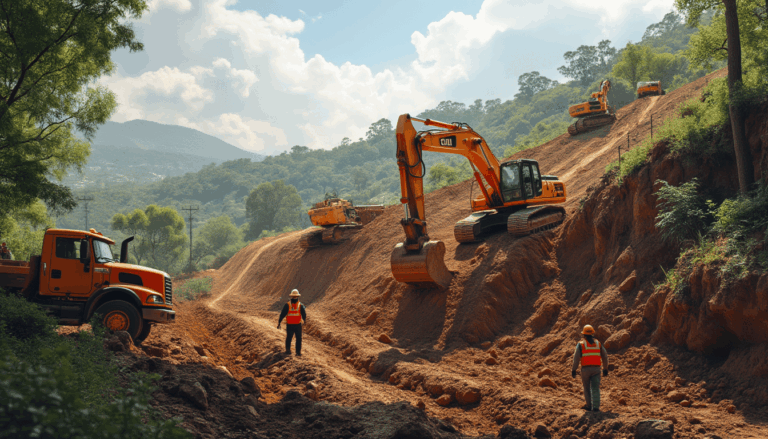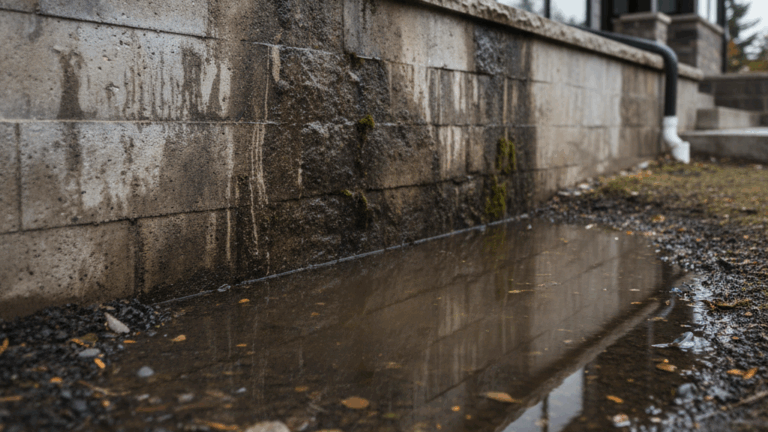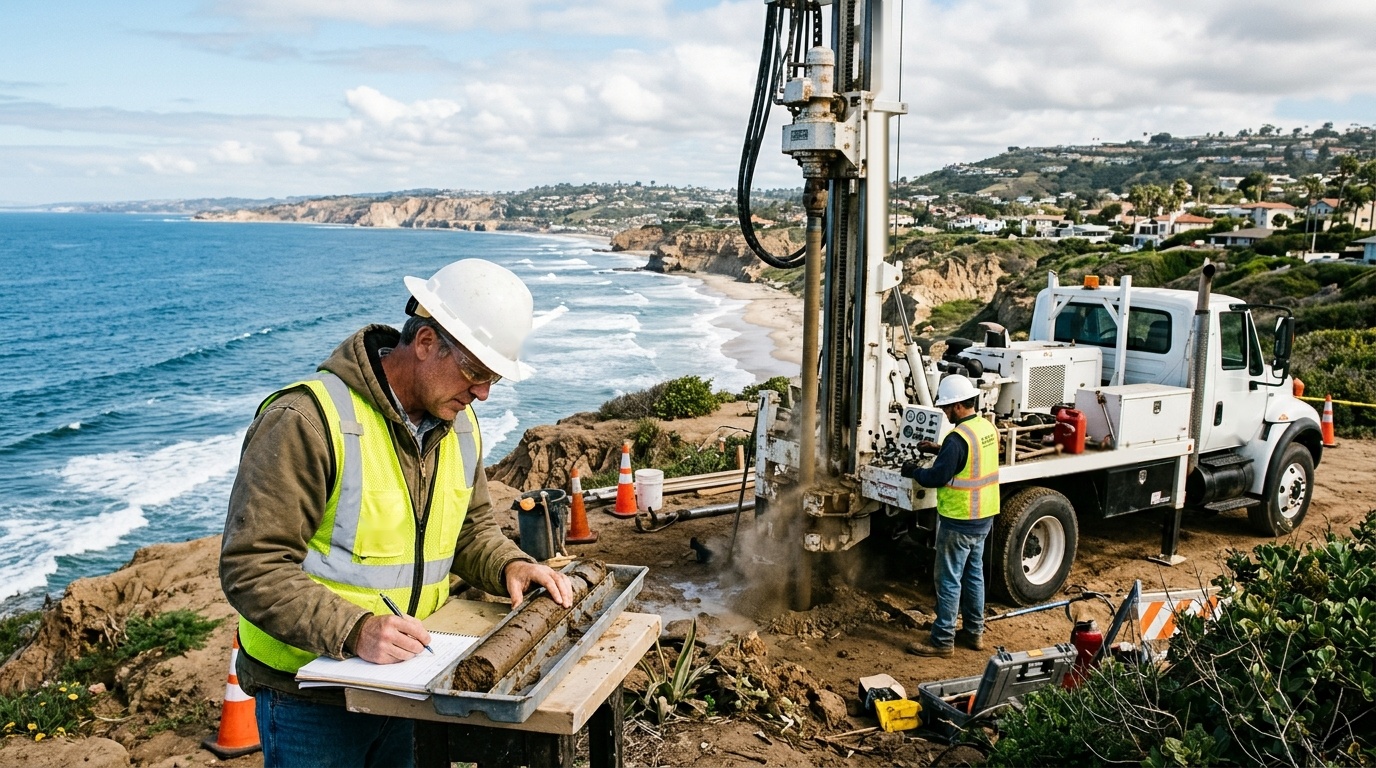
How to Complete a Geotechnical Investigation in San Diego County: 7-Step Timeline Guide 2026
A standard geotechnical investigation in San Diego County takes 2 to 8 weeks from the initial site visit to final report delivery. Residential additions typically finish in 2–3 weeks, while commercial projects requiring seismic hazard assessment or slope stability analysis can take 6–8 weeks. Skill level required: professional. This work must be performed and signed by a licensed Geotechnical Engineer (GE), often with a Certified Engineering Geologist (CEG) for geologic hazard work. It is not a DIY task.
This guide breaks down the timeline step by step so property owners, developers, and contractors in San Diego County can plan construction schedules with confidence.
Before You Begin: Prerequisites Checklist
-
- Site access confirmed, since a drilling rig or hand auger crew needs clear vehicle access
-
- Project plans ready, since preliminary architectural or grading plans speed up scope definition
-
- Budget allocated, with typical geotechnical study costs ranging from $2,500 (residential) to $25,000+ (commercial)
-
- Property survey or parcel map available for the geotechnical engineer to reference
-
- Hazard zone status checked, including whether the parcel sits in a Seismic Hazard Zone or Earthquake Fault Zone on California Geological Survey (CGS) maps
-
- Permit requirements confirmed with your local building department: San Diego County Planning & Development Services for unincorporated areas, the City of San Diego Development Services Department, or your city’s building division
Step 1: Initial Consultation and Scope Definition (1–3 Days)
Contact a licensed geotechnical engineering firm to define the investigation scope for your property.
-
- Submit your project plans and parcel information to the firm.
- Discuss whether the project needs a basic soil report or a full geologic hazard report.
- Receive a proposal outlining the investigation timeline and fee estimate.
The scope set in this phase determines much of the overall report turnaround time. Larger commercial sites may require coordination with a structural engineer and environmental consultant, extending scoping to 3 days.
Step 2: Site Reconnaissance and Permit Coordination (3–7 Days)
Before fieldwork begins, the firm schedules a site walk and secures any required access or encroachment permits.
-
- A staff geologist or field engineer visits the property to mark boring locations.
- The team checks the parcel against CGS Alquist-Priolo Earthquake Fault Zone maps for proximity to active faults.
- The firm contacts DigAlert (Underground Service Alert of Southern California) at 811 to clear underground utilities, which is required before drilling.
This is the most common bottleneck in the schedule, since California law requires at least 2 working days’ notice before excavation or drilling.
Step 3: Drilling, Boring, and Sampling Fieldwork (1–3 Days)
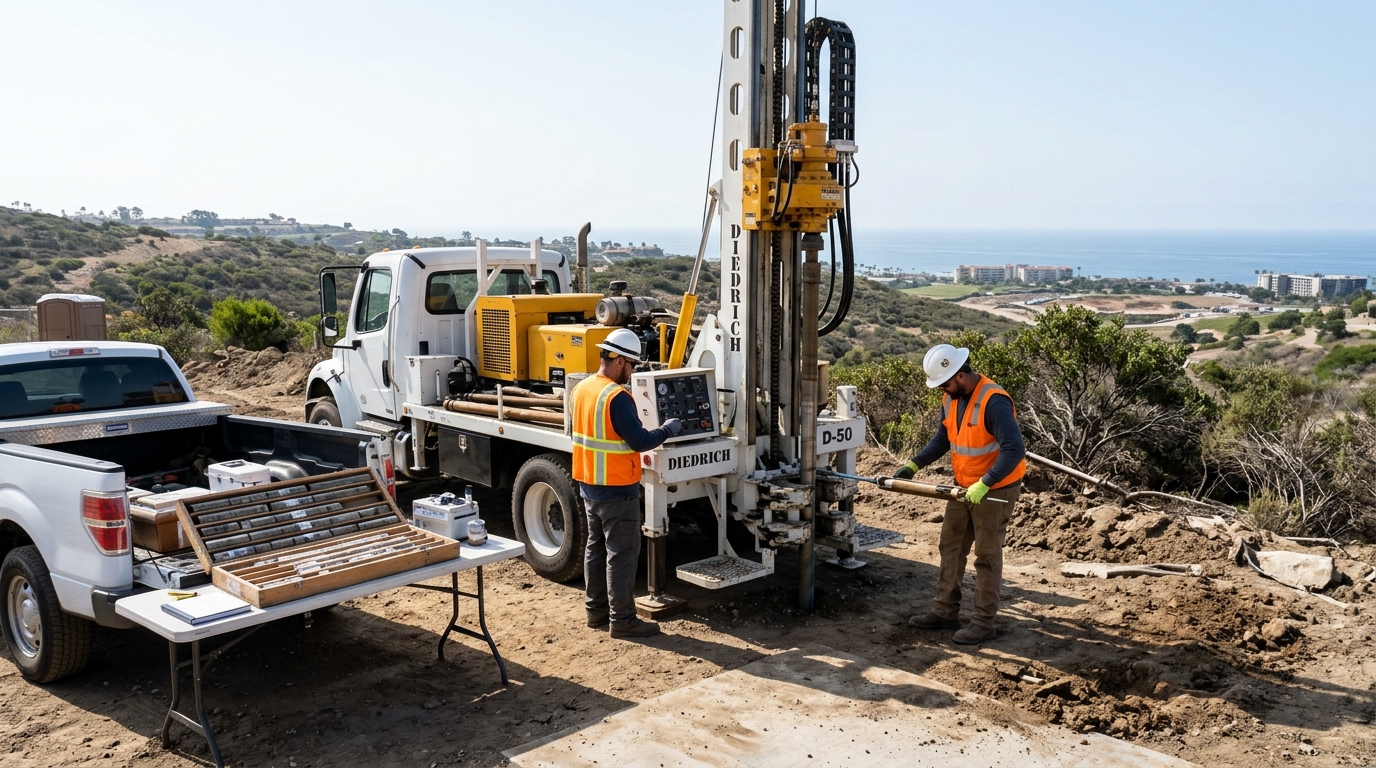
Fieldwork is the core of any subsurface investigation and typically takes 1 day for residential lots and 2–3 days for larger commercial sites.
-
- The crew mobilizes a drilling rig to each marked location.
- Technicians collect soil samples at regular depth intervals and record data in detailed boring logs.
- Where useful, crews excavate test pits for shallow soil observation.
- Field staff note the depth to groundwater, a critical factor in foundation design.
- If a septic system is planned, percolation testing may be scheduled to measure how quickly soil absorbs water. In San Diego County, this is reviewed by the Department of Environmental Health and Quality.
Sampling follows ASTM standards such as the Standard Penetration Test (ASTM D1586). Each boring typically takes 1–3 hours, depending on soil density and the required depth.
Step 4: Laboratory Soil Testing (5–10 Business Days)
Samples are sent to an accredited lab for analysis. This step drives most of the soil testing duration.
-
- Lab technicians classify soils using the Unified Soil Classification System (USCS).
- Shear strength, expansion index, and compaction tests provide the data used to calculate bearing capacity and foundation recommendations.
- Results are compiled into data tables for the engineer’s review.
Rush lab turnaround (48–72 hours) is available for an added fee, which can significantly shorten this step when deadlines are tight.
Step 5: Seismic and Slope Stability Analysis (3–7 Days)
San Diego’s varied terrain, from coastal bluffs to inland hillsides, often requires specialized hazard analysis.
-
- The engineer runs a liquefaction analysis if the parcel lies in or near a mapped Seismic Hazard Zone.
- A slope stability analysis is performed for sites on or near significant slopes.
- Results feed into a site-specific seismic evaluation, which many San Diego County projects require for permitting.
Seismic and slope analysis can add 3–7 days for hillside or fault-adjacent properties, with slope stability analysis averaging about 4 business days once lab data is complete.
Step 6: Report Drafting and Engineer Review (5–10 Days)
The engineering team compiles the findings into a formal report.
-
- A draft geotechnical report or geologic hazard report is written, summarizing boring logs, lab data, and hazard findings.
- A licensed geotechnical engineer reviews the calculations and signs and stamps the final report.\
- Foundation design and grading recommendations are finalized.
This drafting phase is where most of the report preparation time is spent. For a deeper breakdown of each phase, see this detailed geotechnical investigation timeline.
Step 7: Submission to the Building Department (Varies)
The final report is submitted for plan check and grading plan review.
-
- Submit the stamped report to your local building department with your building or grading permit application.
- Respond to any correction requests related to California Building Code compliance.
- Receive permit approval and begin construction.
Plan check times vary by jurisdiction, typically 2–6 weeks for standard residential permits and longer for commercial projects.
Total Timeline Summary
| Step | Task | Duration |
|---|---|---|
| 1 | Consultation & Scope | 1–3 days |
| 2 | Site Reconnaissance & Permits | 3–7 days |
| 3 | Drilling & Sampling | 1–3 days |
| 4 | Lab Testing | 5–10 business days |
| 5 | Seismic/Slope Analysis | 3–7 days |
| 6 | Report Drafting | 5–10 days |
| 7 | Permit Review | 2–6 weeks |
Troubleshooting Common Delays
-
- Utility locating takes longer than expected: Request the 811 ticket right after signing the proposal instead of waiting until boring locations are final.
-
- Lab results are delayed by backlog: Request rush processing for an added fee, which can cut testing time roughly in half.
-
- The property is in a Seismic Hazard Zone: Budget an extra week for liquefaction analysis and review.
-
- Groundwater is encountered unexpectedly: Expect deeper borings and revised foundation recommendations.
-
- The building department requests corrections: Respond quickly with your engineer’s help to keep your place in the review cycle.
-
- Property access is restricted: Arrange gate codes or escorts with the drilling crew before mobilization day.
What Affects Geotechnical Investigation Turnaround Time?
Several factors determine how long a geotechnical investigation takes in San Diego County:
-
- Project size: Residential additions move faster than multi-acre commercial sites.
-
- Soil conditions: Rocky or expansive soils, common in parts of San Diego County, slow drilling.
-
- Hazard zone status: Fault-adjacent or hillside parcels need extra seismic and slope analysis.
-
- Lab queue volume: Peak construction season can lengthen lab turnaround.
-
- Permit backlog: Review times stretch during high permit volume periods.
Next Steps
Once your soil report and any geologic hazard report are approved:
-
- Share the final report with your civil and structural engineers so they can incorporate it into the foundation design.
-
- Submit grading permit applications with your approved soil report.
-
- Hold a pre-construction meeting to confirm all geotechnical recommendations are in the final plans.
-
- Keep your boring logs and lab data, since they’re often needed for future additions or renovation permits.
Frequently Asked Questions
How many days does soil testing take in San Diego?
Fieldwork typically takes 1–3 days, and lab analysis adds another 5–10 business days, for a total of about 6–13 days.
How long does it take to get a geotechnical report for a home addition?
Most residential addition reports are delivered within 2–3 weeks from the initial site visit to the final stamped report.
How fast can a geotechnical engineer complete a site visit?
A basic site reconnaissance visit can be completed in 1 day, though waiting for utility clearance may add 2–3 days before drilling starts.