Is Geotechnical Drilling Worth It During San Diego’s Rainy Season? 2026 Cost, Benefits & Verdict
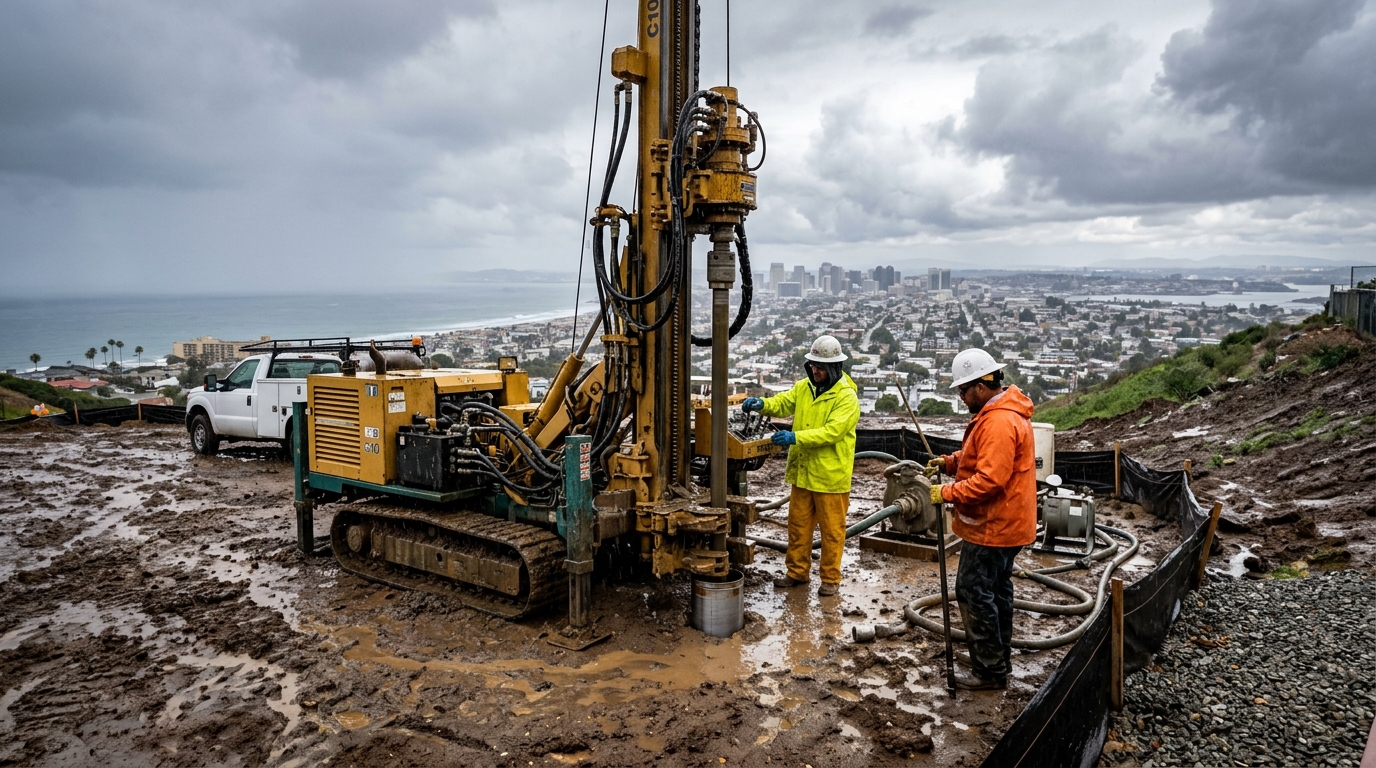
Yes, geotechnical drilling can be done during San Diego’s rainy season, and it is often worth it, as long as the drilling contractor uses proper safety protocols, weather forecasting, and erosion control. San Diego’s rainy season generally runs from about November through March, with most rain falling from December through February. A qualified geotechnical engineer can still deliver accurate soil boring data, cone penetration test (CPT) results, and a complete geotechnical investigation report during this window. Site access, drilling mud disposal, and project timelines just need more careful planning than during California’s dry summer months.
This matters even more this year. NOAA has an El Niño Advisory in effect for winter 2026–27 and expects wetter-than-average conditions across the Southwest, so San Diego projects should plan for a potentially stormier season than usual.
This article breaks down what rainy-season geotechnical drilling includes, what it typically costs in 2026, who benefits most, and when it makes more sense to wait. The goal is a clear answer for engineers, developers, and homeowners deciding whether to schedule a site investigation between November and March.
What You Get: Rainy-Season Geotechnical Drilling Services in San Diego

A reputable geotechnical drilling provider doesn’t simply stop work when clouds appear. Instead, they adapt their approach for wet weather while maintaining data quality for your site investigation report. The core deliverables are the same as a dry-season job (soil classification, strength parameters, and groundwater data), but field methods and scheduling shift to account for moisture.
Included in a Standard Rainy-Season Geotechnical Investigation
- Soil boring and sampling using hollow stem auger or mud rotary drilling, selected based on soil and groundwater conditions
- Cone penetration test (CPT) data for slope stability analysis and foundation design
- Groundwater measurements, which better reflect seasonal high-water conditions during wet months than in summer
- Soil moisture and compaction testing relevant to post-storm conditions
- Weather forecast coordination to schedule rig mobilization around expected storms
- A geologist or environmental consultant on-site to document conditions for environmental compliance
- Laboratory testing of recovered samples, including Atterberg limits, grain-size analysis, and direct shear testing, which follows the same procedures in any season
- Daily field logs documenting rainfall, boring depths, and any equipment downtime, which later support claims or schedule adjustments
Many San Diego County geotechnical firms use a two-method approach in winter: hollow stem auger drilling where soils hold up, and mud rotary drilling where saturated or caving soils make auger drilling impractical. Switching methods mid-project is common and should be anticipated in the original scope of work, not treated as a surprise change order.
Extras and Add-Ons You May Need for Wet Season Construction
- Temporary access roads or steel plating for muddy terrain
- Erosion control and stormwater measures (silt fencing, sediment traps)
- Equipment protection, including tarps and covered staging areas
- Updated permits or agency approvals if site conditions or stormwater runoff routes change
- Additional rain gear for drilling crews and enhanced safety protocols
- Mudslide risk assessment for hillside or slope-adjacent sites
- Portable generators and lighting for shorter daylight hours in December and January
- Extra decontamination for equipment moving between muddy and paved areas, especially on environmentally sensitive sites
San Diego’s rainfall varies a lot from year to year. At San Diego International Airport (Lindbergh Field), the 1991–2020 normal is about 9.8 inches per year, and inland and mountain areas get much more. Strong El Niño years have brought far more: about 18.5 inches in 1982–83 and 17.2 inches in 1997–98, while 2004–05 topped 22 inches. That variability is why seasonal planning should always include a weather contingency plan, not a blanket avoidance of winter drilling. A contingency plan typically sets trigger thresholds (for example, pausing mobilization above a set rainfall intensity) so crews and clients share the same expectations before work begins.
How Site Conditions Change the Scope
Not every rainy-season job needs every add-on listed above. A flat residential lot in a well-drained neighborhood may only require basic tarping and a revised schedule. A hillside lot in a canyon-adjacent community, by contrast, may require a full mudslide risk assessment, additional sediment traps, and a geologist present for every boring. Experienced contractors scope these extras during the initial site walk, not after drilling begins, to avoid mid-project cost surprises.
Cost Breakdown: San Diego Geotechnical Drilling Rates in 2026
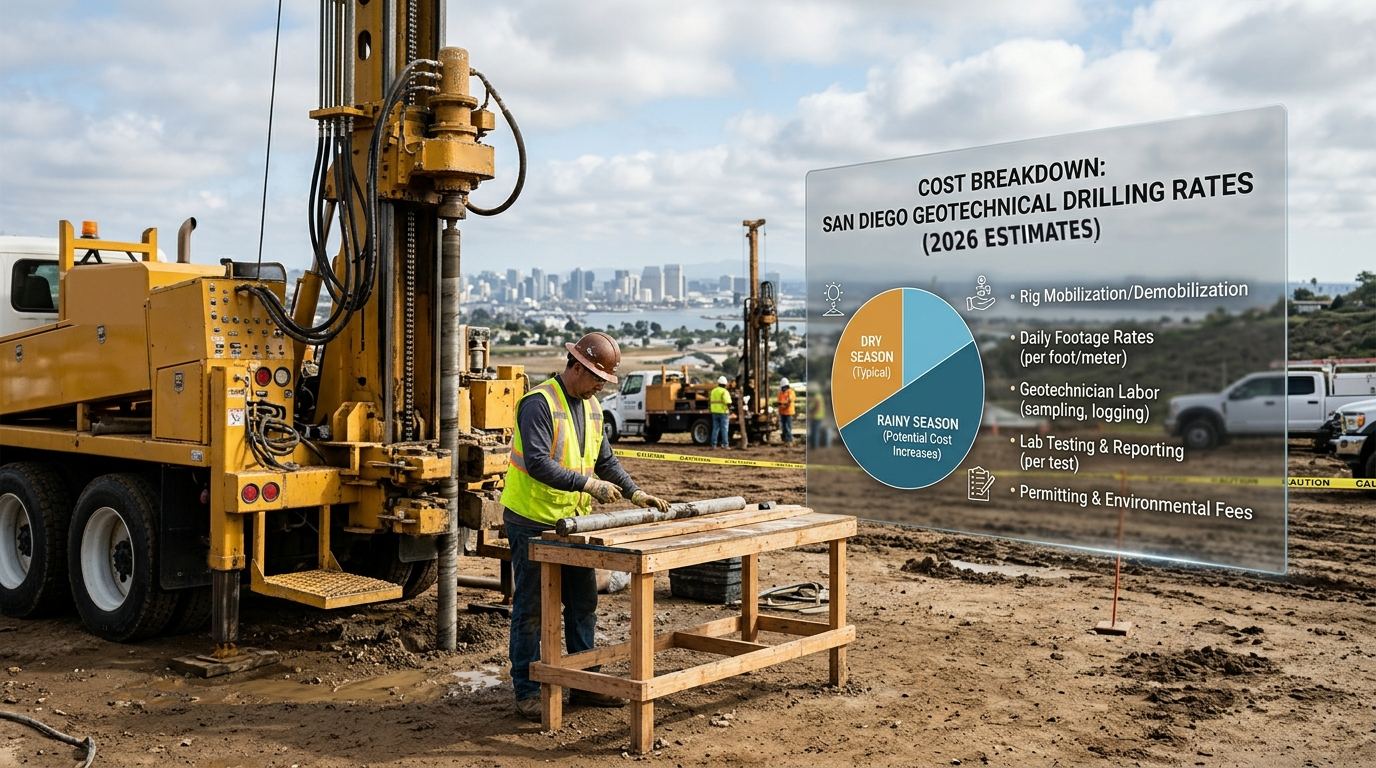
2026 San Diego geotechnical drilling cost breakdown chart detailing rig fees, soil testing, and labor rates.
Rainy-season drilling in San Diego County typically costs about 10% to 25% more than dry-season work, mainly because of mobilization delays, mud management, and drilling mud disposal. The table below shows typical estimated ranges. Actual pricing varies by firm, site access, and scope.
| Service | Dry Season (Est.) | Rainy Season (Est.) |
|---|---|---|
| Standard soil boring (per location) | $1,200–$2,000 | $1,500–$2,500 |
| Cone penetration test (per day) | $1,800–$3,000 | $2,200–$3,500 |
| Mud rotary drilling mobilization | $500–$1,000 | $1,000–$1,800 |
| Erosion and sediment control setup | $300–$800 | $800–$1,500 |
| Weather-related project delay (per day) | N/A | $2,500–$8,000 |
| Full geotechnical investigation report | $3,500–$7,000 | $4,500–$9,000 |
Weather delays are the biggest cost variable, which is why many firms recommend a documented weather contingency plan before signing a drilling contract.
What Drives the Rainy-Season Premium
Three factors account for most of the added cost:
- Mobilization delays: A drill rig scheduled for a Tuesday start may sit idle if access roads are impassable, and crews are often paid a standby rate even when not drilling.
- Drilling mud disposal: Wet-season mud rotary work generates more fluid waste that must be hauled offsite and handled under California water quality rules. This often adds a few hundred dollars per site.
- Equipment wear: Saturated soil increases torque on augers and can shorten bit life, which some contractors pass through as a small surcharge.
Example Cost Scenario
Consider a mid-sized hillside residential project needing four soil borings, one day of CPT testing, and a full investigation report. In dry season, total costs might land near $12,000. During rainy season, the same scope, including erosion control setup and a two-day weather delay, could reach $17,500 to $19,000. That’s roughly a 45% to 60% increase, well above the typical 10% to 25% range. The difference comes from the weather delay and slope-specific add-ons, which shows how site-specific risks stack on top of the baseline premium.
Expected Benefits & ROI Analysis of Winter Geotechnical Work
Despite the added cost and complexity, drilling during San Diego’s rainy season delivers real value for certain project types.
1. More Accurate Groundwater Level Assessment
Groundwater readings taken during or shortly after the rainy season capture seasonal high-water conditions. Readings taken only in summer can understate winter groundwater levels, which directly affects foundation design. Underestimating groundwater can lead engineers to specify undersized waterproofing or drainage systems, resulting in costly retrofits after construction.
2. Faster Contractor and Rig Availability
Because many clients push projects to summer, drilling contractors often have more openings in winter. Shorter booking lead times can shorten your overall timeline, even with occasional rain delays.
3. Realistic Rainfall Impact on Soil Stability Data
Testing in wet conditions shows how soils actually behave during California’s wettest months. This is critical for slope stability analysis on hillside lots across San Diego County. Engineers designing retaining walls or graded slopes benefit from data collected under conditions similar to those the structure must withstand, rather than extrapolating from dry-season samples.
4. Permitting Agency Timing Advantages
Plan review times depend on each agency’s workload. In some cases, a winter submission backed by a completed geotechnical report can move through review sooner than one submitted during a busier period. Check current review times with your permitting agency.
5. Stronger Defensibility in Disputes
Winter-collected data can also help with risk management. If a slope failure or drainage dispute comes up after construction, a geotechnical report based on wet-season conditions is harder to challenge as unrepresentative than one based only on dry-season assumptions.
For developers planning subsurface exploration on sites with known drainage challenges, scheduling a geotechnical drilling rainy season investigation can actually produce more conservative, defensible engineering data than a dry-season-only study.
Who Should (and Shouldn’t) Invest in Rainy-Season Drilling
Good Candidates for Wet Season Construction Investigation
- Slope-adjacent or hillside sites requiring slope stability analysis
- Projects needing groundwater data that reflects worst-case winter conditions
- Developers with fixed timelines that can’t wait until spring
- San Diego County sites with prior erosion or drainage problems
- Projects where the environmental consultant requires post-storm sampling for compliance
- Commercial or multi-family developments where permitting delays carry financial penalties
- Sites where a prior dry-season investigation left open questions about seasonal groundwater
Poor Candidates / Who Should Wait
- Small residential projects with flexible schedules and tight budgets
- Sites with no existing access road, where access alone could add thousands in cost
- Projects that can’t absorb extra delays during an El Niño winter like 2026–27, when wetter-than-average conditions are expected
- Clients unwilling to accept a weather contingency plan or rain delay clause in the drilling contract
- Low-risk flatland sites where dry- and wet-season groundwater readings are historically similar
- Projects with no deadline pressure that would benefit from winter scheduling
A useful rule of thumb: the more a project’s design depends on worst-case groundwater or slope behavior, the stronger the case for winter drilling. The more cost-sensitive and schedule-flexible a project is, the stronger the case for waiting.
Alternatives to Consider Before Scheduling Rainy-Season Drilling
- Dry-season scheduling: April through October offers the most predictable site access and lowest cost, though it delays data on seasonal groundwater highs.
- Phased investigation: Do preliminary soil sampling in dry months, then verify groundwater conditions with a single winter boring. This often costs less than a full wet-season mobilization while still capturing seasonal high-water data.
- Hybrid drilling methods: Switching between hollow stem auger and mud rotary drilling based on real-time conditions can reduce delays without sacrificing data quality.
- Short-range forecast triggers: Some contractors use 72-hour forecasts to pause only during active storms rather than avoiding the whole season.
- Piezometer installation: Installing a piezometer during a dry-season boring lets engineers track groundwater changes through the following winter (manually or with a data logger) without mobilizing a drill rig again.
- Nearby data: For small, low-risk projects, engineers sometimes reference groundwater data from nearby completed investigations instead of commissioning new winter borings, when site conditions are closely comparable.
Frequently Asked Questions
Is it safe to drill for soil samples in the rain?
Yes, with proper safety protocols. Crews use rain gear, non-slip rig platforms, and controlled drilling fluid management to work safely in wet conditions. Work should pause during heavy storms, lightning, or unsafe access conditions.
What is the best time of year for geotechnical drilling in San Diego?
April through October offers the easiest site access, but the rainy season provides more representative groundwater readings for slope stability and foundation design.
How does rain affect soil boring projects in San Diego?
Rain increases soil saturation, which can slow hollow stem auger drilling, require mud rotary drilling instead, and call for more erosion control around the site.
Can geotechnical drilling be done during San Diego’s rainy season without permit issues?
Most standard geotechnical investigation permits remain valid year-round, though a rainy day drilling permit amendment may be needed if storm water runoff routes change on site.
How do El Niño conditions affect geotechnical drilling schedules in San Diego?
El Niño winters tend to be wetter in Southern California. Strong El Niño years have brought roughly 17–18 inches of rain to San Diego’s airport station, compared with a normal of about 9.8 inches. NOAA expects a very strong El Niño in winter 2026–27, so plan for more multi-day delays and a more conservative contingency plan.
Do I need special permits for drilling during the rainy season?
No. Lab testing follows the same ASTM procedures year-round. The season affects field logistics and in-place moisture conditions, not the accuracy of lab analysis.
How much extra time should I budget for a winter geotechnical investigation?
Many San Diego contractors suggest adding about 20% to 30% to the standard field schedule to absorb rain delays. In a strong El Niño winter, budget toward the high end.
Final Verdict: Is Geotechnical Drilling Worth It During San Diego’s Rainy Season?
Yes, for time-sensitive, slope-sensitive, or groundwater-dependent projects, but not for budget-constrained jobs with flexible timelines. The typical 10% to 25% cost premium is usually justified by more accurate groundwater data, better contractor availability, and the ability to keep complex San Diego projects on schedule.
Choosing a drilling contractor for wet weather in San Diego comes down to three things: documented safety protocols, a clear weather contingency plan, and experience with both hollow stem auger and mud rotary drilling. When those are in place, rainy-season geotechnical work is not just possible. It can produce more reliable engineering data than a dry-season-only study.
Quick Scorecard
- Data accuracy (groundwater/slope): Higher in rainy season
- Cost: About 10%–25% higher; 50%+ on high-risk sites with delays
- Scheduling risk: Moderate to high (higher during El Niño winters like 2026–27), reduced with contingency planning
- Contractor availability: Generally better than peak summer season
- Best fit: Hillside, slope-adjacent, and deadline-driven projects
- Poor fit: Small, flexible, cost-sensitive residential jobs