What Is the Difference Between a Percolation Test and Soil Boring? Essential Site Testing Comparison
A percolation test measures soil absorption rate for wastewater disposal systems, while a soil boring is a subsurface investigation that collects soil samples at various depths to analyze soil composition and engineering properties for construction projects. According to ASTM International testing standards, these soil testing methods serve distinct regulatory and engineering purposes despite both involving subsurface exploration.
Understanding Percolation Test Fundamentals

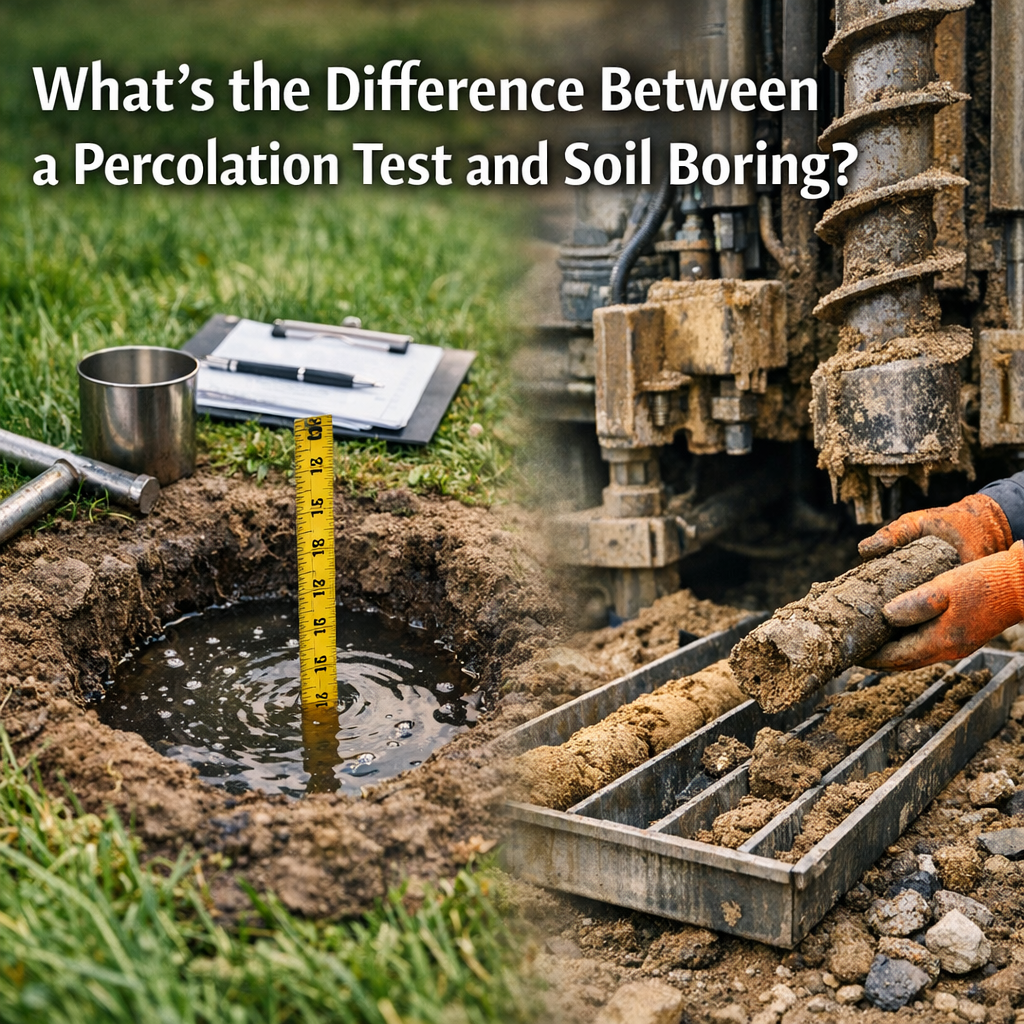
A percolation test (perc test) is a shallow excavation test that evaluates soil absorption capacity and infiltration rate. The local health department requires this test for septic system installation and onsite sewage system permissibility. The test measures how quickly water infiltrates through soil, determining the soil permeability analysis necessary for drain field and leach field design.
The percolation testing procedure typically reaches depths of 18 to 48 inches below ground surface. An environmental engineer or soil scientist oversees the field percolation test to ensure compliance with EPA guidelines and site evaluation requirements. The infiltration capacity measured during testing directly influences absorption field sizing and wastewater treatment system design specifications.
Soil Boring Investigation Explained

Soil boring is a deep hole test using a drilling rig or soil auger to extract soil samples from multiple soil layers and document the complete soil profile. A geotechnical engineer conducts this subsurface investigation for foundation design, soil bearing capacity assessment, and construction site testing requirements. Unlike percolation tests, boring investigation extends 10 to 50 feet or more to bedrock.
The soil boring test produces a detailed boring log documenting soil classification, soil texture, soil structure, and water table depth. Soil sampling techniques collect continuous soil core sampling for laboratory analysis including particle size analysis, sieve analysis, hydrometer test, Atterberg limits test, and soil compaction testing. For projects requiring foundation pier depth San Diego specifications, these geotechnical soil investigation results are essential for determining proper foundation soil analysis parameters.
How a Percolation Test Works: Step-by-Step Procedure
- Test Pit Excavation: Dig test holes 6 to 12 inches in diameter to required percolation test depth requirements by state (typically 18-48 inches).
- Pre-Soaking: Fill holes with water 12 to 24 hours before testing to saturate soil and simulate field conditions.
- Water Application: Add water to maintain 6 to 12 inches above the bottom of the test hole.
- Rate Measurement: Record water infiltration time intervals using standardized percolation test step by step procedure protocols.
- Calculation: Calculate percolation rate in minutes per inch to determine septic field design parameters and soil absorption rate test results.
Environmental site assessment specialists document percolation test location requirements with multiple test locations across the proposed leach field area. The falling head test methodology ensures accurate hydraulic conductivity measurements for onsite wastewater system permitting through the building permit process.
How Soil Boring Investigation Works: Component Steps
- Site Preparation: Survey and mark boring investigation locations based on soil boring spacing requirements for projects.
- Drilling Operation: Use rotary drilling, auger boring, or other soil boring equipment and methods to advance the boring.
- Sample Collection: Extract continuous samples and perform SPT test (standard penetration testing) at specified intervals.
- Visual Classification: Field engineer documents soil type identification, soil horizon boundaries, and groundwater encounters.
- Laboratory Testing: Soil testing laboratory conducts soil gradation test, moisture content test, soil density test, and liquid limit test analysis.
- Reporting: Compile comprehensive soil boring report what to look for including soil mechanics data and engineering recommendations.
The geotechnical testing process often incorporates constant head test for saturated hydraulic conductivity when groundwater assessment is required. For additional insights into sampling methodologies, reference How Does Environmental Soil Sampling Work?.
Critical Differences Between Percolation Test and Soil Boring
| Feature | Percolation Test | Soil Boring |
|---|---|---|
| Primary Purpose | Septic system design and wastewater disposal evaluation | Foundation design requirements and soil engineering properties assessment |
| Depth Range | 18-48 inches (shallow excavation test) | 10-50+ feet to bedrock or required depth |
| What It Measures | Water infiltration, soil absorption capacity, permeability coefficient | Soil classification methods, soil composition, subsurface water flow, soil porosity |
| Regulatory Body | Local health department, EPA standards | ASTM International, geotechnical engineer specifications |
| Equipment Used | Hand tools, test pit excavation, infiltrometer test devices, double ring infiltrometer | Drilling rig, soil auger, SPT equipment, core sampling apparatus |
| Typical Timeline | 4-8 hours including pre-soak (how long does percolation test take) | 1-3 days depending on how many soil borings are needed for construction |
Common Misconceptions About Percolation Test vs Soil Boring
Myth: Can soil boring replace percolation test for septic systems?
Reality: No. Soil borings provide soil classification and soil characteristics data but do not measure the infiltration rate test required for septic system test approval. The percolation test requirements for septic systems mandate specific water percolation measurements that boring investigation does not provide.
Myth: Percolation tests provide adequate information for foundation design.
Reality: Percolation test for drainage system design addresses only shallow soil drainage characteristics. Foundation design requires comprehensive soil boring for foundation design requirements including deep soil exploration methods, soil bearing capacity, and subsurface drainage analysis.
Myth: Both tests cost approximately the same amount.
Reality: How much does a percolation test cost compared to soil boring reveals significant differences. Percolation testing typically costs $500-$1,500, while soil boring requirements for construction projects range from $1,000-$5,000+ depending on depth and how many soil borings are needed for construction projects.
Myth: A failed percolation test means property cannot be developed.
Reality: Failed percolation test what are my options include engineered septic systems, mound systems, or alternative wastewater treatment technologies. Percolation test failure reasons such as percolation test in clay soil conditions or saturated soil often have engineering solutions.
Practical Applications: When to Use Each Test
Use Percolation Test When:
- Installing septic systems or onsite sewage systems requiring septic permit approval
- Designing drainage systems or subsurface drainage solutions
- Evaluating site suitability analysis for wastewater disposal
- Assessing soil water retention and soil filtration rate for absorption field sizing
- Meeting percolation test for septic system installation regulatory requirements
Use Soil Boring When:
- Planning residential construction or commercial building projects
- Conducting geotechnical investigation for foundation soil analysis
- Determining soil bearing capacity for structural design
- Identifying bedrock depth and water table conditions
- Performing environmental site assessment for contamination screening
- Analyzing underground soil conditions for deep foundations or soil boring in rocky terrain methods
Cost and Timeline Comparison
Understanding the investment for soil testing methods helps project planning. A standard percolation test procedure vs soil boring procedure comparison shows distinct differences in resource requirements. Percolation testing costs $500-$1,500 and requires one day plus pre-soak time. Who performs percolation tests and soil borings differs—licensed soil scientists or environmental engineers conduct perc tests, while geotechnical engineers perform boring investigations.
Soil boring for geotechnical investigation costs $1,000-$5,000+ depending on soil boring depth for residential construction requirements. Projects may need 2-6 borings based on site size and complexity. Laboratory percolation test analysis adds $200-$500, while soil sample analysis methods including hydrometer tests and Atterberg limits testing can add $500-$2,000 to total costs.
Choosing the Right Test for Your Project
The what is the difference between percolation test and soil boring question ultimately depends on project objectives. For septic system design and wastewater treatment planning, percolation test and soil boring for septic system evaluation work together—the perc test determines absorption capacity while shallow borings verify soil texture analysis and absence of restrictive layers.
For construction site testing and foundation design, soil boring provides comprehensive subsurface investigation data. Understanding how to interpret percolation test results versus how to read soil boring logs ensures appropriate application of each site investigation technique. The difference between perc test and geotechnical boring lies in regulatory purpose and depth of investigation, making both valuable site evaluation procedures for different applications.