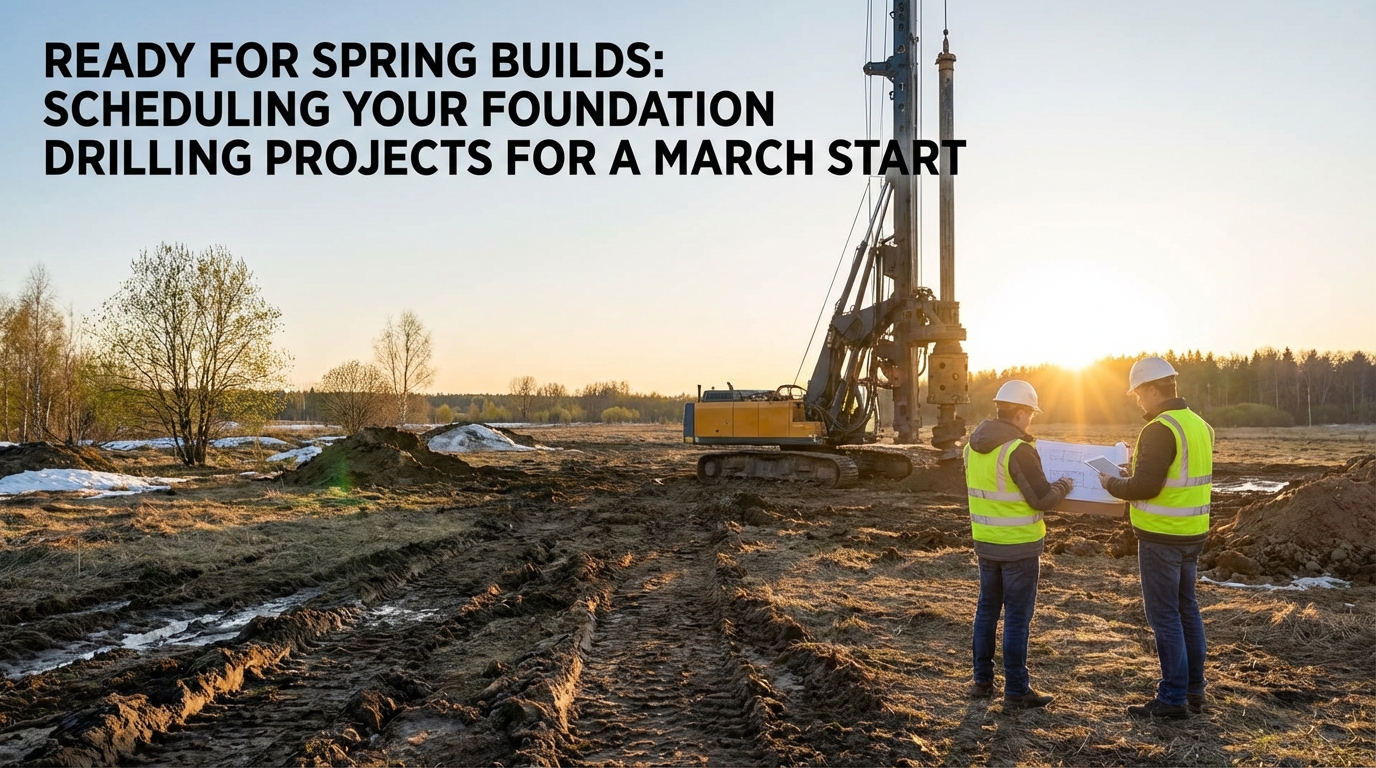
How to Schedule Foundation Drilling Projects for a March Start: 7-Step Planning Guide
Outcome: Successfully schedule and execute foundation drilling operations for a March construction start by completing pre-spring preparation between December and February. Timeframe: 3-4 months of planning. Skill Level: Intermediate project management with coordination of drilling contractors and geotechnical engineers.
Before You Begin: Prerequisites
- Completed foundation design from foundation engineering consultants
- Initial geotechnical report with soil testing results
- Construction budget allocated for drilling services and equipment mobilization
- Building permits application submitted (processing time: 4-8 weeks)
- List of licensed foundation contractors in your region
- Site access plan and utility location markings
- Understanding of local frost depth and spring thaw patterns
Step 1: Assess Ground Conditions and Frost Depth (December-January)

Begin spring construction planning by evaluating winter ground conditions during December and January. According to the American Concrete Institute (2024), understanding soil moisture and frost penetration determines optimal drilling methodology for March foundation work.
1.1 Request Geotechnical Analysis
Contact geotechnical engineers to conduct winter soil testing. Request a foundation inspection that evaluates groundwater levels, soil composition, and expected spring thaw conditions. The geotechnical report identifies optimal foundation types (auger drilling, pile foundations, or caisson drilling) and drilling depth requirements.
1.2 Monitor Frost Depth Patterns
Track frost depth measurements at your construction site. In northern regions, frost typically penetrates 36-48 inches deep by January. Document historical spring thaw data for your location to predict when soil thawing enables frost-free drilling operations. Most March foundation drilling projects require frost penetration below drilling depth by early March.
1.3 Evaluate Site Access During Winter to Spring Transition
Inspect site access routes during winter conditions. Identify potential challenges for drilling rigs and equipment transport during the spring thaw when ground conditions become saturated. Plan alternative access routes if primary paths become impassable due to soil moisture or melting snow.
Step 2: Secure Permits and Complete Site Survey (January-February)

Foundation drilling preparation requires obtaining construction permits and drilling permits between January and February. The National Association of Home Builders (2024) reports that permit processing averages 6-8 weeks, making January submission critical for March construction start timing.
2.1 Submit Building Permits Application
File building permits with complete foundation specifications, drilling methodology documentation, and site preparation plans. Include foundation design drawings showing bore piles or drilled shafts dimensions, reinforcement steel requirements, and concrete placement specifications. Request expedited review for seasonal construction projects.
2.2 Obtain Drilling Permits and Safety Approvals
Apply for drilling permits specific to foundation installation work. Submit OSHA regulations compliance documentation and safety protocols for drilling operations. Many jurisdictions require separate drilling permits beyond standard building permits for deep foundation work exceeding 20 feet depth.
2.3 Complete Pre-Spring Site Survey
Hire licensed surveyors to mark exact drilling locations before ground freezes further. The site survey establishes drilling project coordination points and confirms foundation engineering specifications align with actual site conditions. Survey during January allows corrections before construction crew mobilization.
Step 3: Select Drilling Contractors and Equipment (January-February)
Early spring foundation drilling demand peaks in March, making January contractor selection essential. According to Construction Industry Research (2024), drilling contractors book 70% of spring capacity by mid-February.
3.1 Request Proposals from Foundation Contractors
Contact minimum three licensed foundation contractors specializing in your required drilling technology (auger drilling, pile foundations, or caisson drilling). Request detailed proposals including March foundation drilling contractor scheduling, equipment specifications, construction crew size, and drilling schedule timelines. Verify contractor March availability immediately.
3.2 Evaluate Drilling Equipment Capabilities
Assess proposed drilling equipment suitability for your foundation types and spring drilling conditions. Verify drilling rigs handle required drilling depth (typically 15-60 feet for residential foundation systems) and accommodate wet spring weather conditions. Confirm equipment includes necessary augers, casings, and concrete placement tools.
3.3 Verify Contractor Experience with Seasonal Construction
Select drilling contractors with documented early spring construction experience. Request references from previous March foundation drilling projects showing successful foundation work timing despite spring thaw challenges. Experienced contractors understand spring construction season logistics and weather-dependent construction contingencies.
Step 4: Develop Project Timeline and Budget (February)
February requires finalizing your foundation drilling project timeline and construction budget. Project management best practices recommend 15-20% contingency for spring foundation drilling operations due to weather variables.
4.1 Create Detailed Construction Timeline
Develop week-by-week construction scheduling from March 1 through project completion. Schedule drilling operation planning for the first week of March when ground conditions typically permit foundation installation. Allocate 2-3 weeks for drilling activities on standard residential projects, plus 1 week for concrete placement and initial curing. Build 5-7 day weather delays into spring project timeline optimization.
4.2 Calculate Foundation Drilling Costs
Finalize construction budget including drilling services ($50-150 per linear foot according to 2024 industry averages), equipment mobilization ($2,000-8,000), construction materials, reinforcement steel, drilling permits fees, and site preparation expenses. Add 15% contingency for seasonal construction challenges including extended mobilization during spring drilling conditions.
4.3 Establish Payment Schedule with Contractors
Negotiate payment terms aligned with project milestones: 10% deposit at contract signing, 40% at drilling operations commencement, 40% at drilling completion, 10% after foundation inspection approval. This structure protects both parties during weather-dependent spring foundation work coordination.
Step 5: Prepare Site for Spring Thaw (February-Early March)
Site preparation during late February positions your project for immediate March start date execution. The Construction Specifications Institute (2024) identifies pre-thaw site readiness as the critical factor in on-time spring drilling operations.
5.1 Clear Site Access and Establish Staging Areas
Remove snow and ice from drilling rig access routes before ground softens. Establish equipment staging areas on firm, elevated ground that drains well during spring thaw. Mark staging zones for drilling equipment, construction materials storage, and construction crew facilities.
5.2 Install Temporary Drainage Systems
Create temporary drainage to manage spring thaw runoff and groundwater. Install silt fencing around drilling locations to prevent soil erosion. Proper drainage maintains drilling site access and prevents drilling rigs from becoming mired in saturated spring conditions.
5.3 Pre-Position Construction Materials
Deliver reinforcement steel, casings, and concrete forms before March weather creates delivery challenges. Store construction materials on pallets above potential spring flooding levels. Early delivery prevents spring foundation drilling project delays caused by material supply chain disruptions.
Step 6: Coordinate Equipment Mobilization (Late February-Early March)
Equipment mobilization requires precise spring construction foundation drilling coordination 7-10 days before drilling begins. Foundation contractors typically mobilize drilling equipment between February 20-28 for March construction start projects.
6.1 Schedule Pre-Mobilization Site Meeting
Conduct final site meeting with drilling contractors, geotechnical engineers, and construction crew 10 days before March start. Review drilling methodology, verify ground condition assessments match current site conditions, and confirm drilling permits documentation. Address site access concerns and review safety protocols.
6.2 Monitor Spring Weather Forecasts
Track extended weather forecasts starting February 20. Identify potential delays from late winter storms or extended freeze periods. Communicate with foundation contractors about mobilization adjustments if weather conditions delay optimal drilling timing by 3-5 days. Most contractors recommend starting when daytime temperatures consistently exceed 40°F.
6.3 Confirm Utility Clearances
Reconfirm utility locations immediately before drilling rigs arrive. Contact utility companies for final clearance 48-72 hours before foundation drilling operations begin. Spring ground shifts can move temporary utility markers placed during frozen conditions.
Step 7: Execute Foundation Drilling Operations (March)
March foundation drilling execution requires daily project management and adaptation to spring drilling conditions. According to the Deep Foundations Institute (2024), successful March projects maintain flexible scheduling while prioritizing worker safety and foundation quality.
7.1 Conduct Daily Ground Condition Assessments
Begin each drilling day with soil moisture evaluation and site access inspection. Spring conditions change rapidly; daily assessment prevents equipment damage and ensures drilling depth accuracy. Document ground conditions for quality control and future foundation repair reference.
7.2 Monitor Drilling Progress and Quality
Verify each bore pile or drilled shaft meets foundation specifications for depth, diameter, and verticality. Inspect excavation spoils for unexpected soil layers not identified in geotechnical reports. Conduct interim foundation inspections at 25%, 50%, and 75% completion milestones.
7.3 Coordinate Concrete Placement Timing
Schedule concrete delivery immediately after drilling depth verification and reinforcement steel installation. Spring foundation drilling projects must minimize time between drilling completion and concrete placement to prevent groundwater infiltration or borehole collapse. Plan concrete placement within 4-8 hours of drilling completion when possible.
7.4 Document Completion and Schedule Final Inspection
Photograph completed foundation work from multiple angles showing drilling locations, depths achieved, and concrete placement quality. Request final foundation inspection within 48 hours of project completion. Obtain written approval before demobilizing drilling equipment.
Troubleshooting Common March Foundation Drilling Challenges
If unexpected frost depth exceeds drilling capacity: Pause drilling operations and consult geotechnical engineers. Consider mechanical ground thawing (steam injection or heated blankets) or delay start 5-7 days for additional natural thawing.
If groundwater infiltration floods boreholes: Deploy dewatering pumps immediately and install temporary casings. Increase casing depth 3-5 feet beyond original specifications and coordinate with foundation engineering team for design modifications.
If site access becomes impassable during spring thaw: Install temporary construction mats (timber or steel) along access routes. Consider lighter, tracked drilling rigs if originally specified wheeled equipment cannot traverse saturated ground conditions.
If weather delays extend beyond contingency buffer: Communicate immediately with building officials to request permit extension. Renegotiate contractor scheduling and evaluate accelerated drilling techniques (multiple rigs or extended daily hours) to compress timeline.
If soil conditions differ from geotechnical report: Stop drilling and request emergency geotechnical assessment. Document encountered conditions with photos and soil samples. Adjust drilling methodology or foundation design based on updated engineering recommendations.
Next Steps After Foundation Drilling Completion
Upon completing March foundation drilling operations, proceed with these construction timeline optimization steps:
- Allow concrete curing period: Wait minimum 7 days (14 days in temperatures below 50°F) before loading foundations
- Schedule backfilling operations: Coordinate excavation backfill after foundation inspection approval, typically 10-14 days post-drilling
- Plan spring construction season continuation: Proceed with foundation wall construction, basement installation, or grade beam placement
- Document project for future reference: Create complete foundation drilling project management file including as-built drawings, inspection reports, and contractor performance notes
- Evaluate spring building preparation success: Review actual timeline against planned schedule to improve future seasonal project planning
Successful March construction start foundation drilling requires disciplined winter preparation, proactive contractor coordination, and flexible execution during the spring foundation work season. Projects beginning December planning consistently achieve March start dates with minimal weather delays.