How to Determine Foundation Pier Depth in Expansive San Diego Soil: 6-Step Guide 2025
Foundation piers in expansive San Diego soil typically require depths of 15 to 40 feet to reach stable soil layers below the active zone where seasonal moisture variation causes soil expansion and soil shrink-swell. According to the California Building Code (2022), pier depth must extend below the zone of seasonal moisture change to prevent foundation movement and building settlement. This comprehensive guide provides homeowners, contractors, and structural engineers with the exact process to determine proper pier depth for San Diego County conditions.
Outcome: Complete determination of required foundation pier depth for your San Diego property within 4-6 weeks. Skill Level: Intermediate (requires professional consultations).
Before You Begin: Essential Prerequisites

Required Materials and Professionals:
- Geotechnical engineer licensed in California for soil investigation
- Structural engineer for foundation design criteria and pier specifications
- Building permit from San Diego County or city jurisdiction
- Geotechnical report (cost: $2,500-$5,000 in San Diego, 2025)
- Property survey showing existing structures and water table location
- Access to site for drilling equipment and excavation depth capabilities
Key Documents:
- California Geological Survey maps for your specific area
- International Building Code (IBC 2021) Chapter 18 requirements
- American Concrete Institute (ACI 318) standards for concrete strength
- Local soil reports from neighboring properties (if available)
Understanding San Diego’s Expansive Soil Conditions

San Diego County contains extensive deposits of Adobe clay and bentonite clays with high soil expansion potential. According to the California Geological Survey (2023), approximately 60% of San Diego’s inland areas contain expansive soil with a Plasticity Index exceeding 30. The Unified Soil Classification System categorizes these soils as CH (high plasticity clay) or MH (elastic silt), both prone to significant volume changes.
The marine layer affects coastal areas differently than inland San Diego foundation pier depth requirements. Point Loma and coastal communities experience more consistent soil moisture levels, while Mission Valley and inland regions undergo dramatic seasonal soil changes. Clay content in San Diego soils ranges from 30% to 65%, directly impacting ground stability and foundation depth requirements.
Soil Expansion Mechanisms
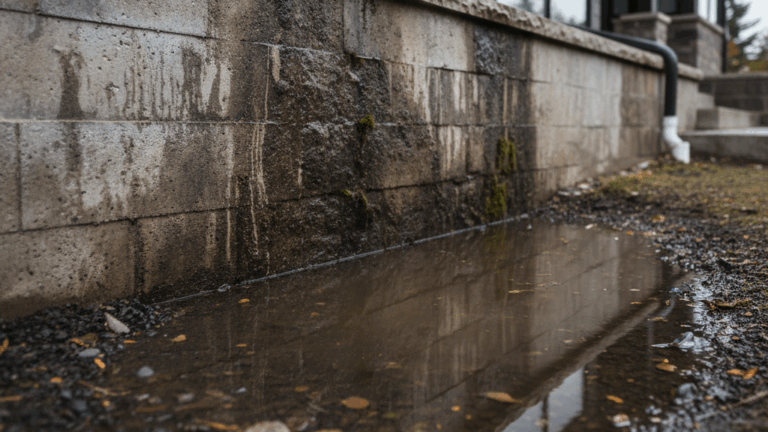
Clay soil particles absorb water molecules, causing soil heave that generates upward pressures exceeding 5,000 pounds per square foot. Conversely, during dry seasons, soil compaction and settlement occur as moisture evaporates. This cyclical expansion and contraction creates differential settlement, leading to foundation crack formation and structural damage. Foundation piers must extend through this active zone to transfer loads to stable soil layers or bedrock.
Step 1: Order Comprehensive Geotechnical Investigation
Contact a geotechnical engineer licensed by the California Board for Professional Engineers, Land Surveyors, and Geologists. The soil engineer will perform soil testing at multiple locations across your property to depths of 30-50 feet. Standard geotechnical investigation includes:
- Soil boring: Minimum 3 test holes for residential properties, 5+ for commercial building sites
- Laboratory analysis: Determines clay content, soil composition, and Plasticity Index
- Moisture content testing: Measures existing soil moisture and seasonal variation patterns
- Expansion testing: Quantifies soil expansion potential under controlled moisture addition
- Soil bearing capacity: Calculates maximum soil bearing pressure (typically 1,500-3,000 psf for San Diego clay)
Timeframe: 2-3 weeks for complete soil investigation and laboratory results.
Step 2: Review Geotechnical Report Findings
The geotechnical report provides site-specific analysis with exact pier depth recommendations. Key sections include:
| Report Section | Critical Information |
|---|---|
| Soil Properties | Soil classification, clay percentage, soil density, natural moisture content |
| Active Zone Depth | Depth where moisture variation ceases (typically 10-25 feet in San Diego) |
| Minimum Depth | Recommended pier embedment depth below active zone |
| Foundation Type | Deep foundation system recommendation (drilled piers, helical piers, or caissons) |
| Pier Specifications | Diameter requirements, pier spacing, rebar configuration |
According to the International Building Code Section 1808.2.23.1 (2021), the geotechnical report must explicitly state foundation requirements for expansive soil conditions. The soil report becomes a legally binding component of your building permit application.
Step 3: Calculate Required Pier Depth Using California Standards
Pier depth calculation combines multiple factors specific to San Diego soil conditions:
Formula Components:
Minimum Pier Depth = Active Zone Depth + Safety Factor + Bearing Stratum Penetration
- Active Zone Depth: Determined from geotechnical investigation (San Diego range: 10-25 feet)
- Safety Factor: California Building Code requires minimum 5-foot penetration below active zone
- Bearing Stratum Penetration: Additional depth into stable layer (3-10 feet depending on soil bearing capacity)
San Diego-Specific Examples:
Coastal Property (Point Loma): Active zone = 12 feet, Safety factor = 5 feet, Bearing penetration = 3 feet. Total minimum depth = 20 feet
Inland Property (Mission Valley): Active zone = 22 feet, Safety factor = 5 feet, Bearing penetration = 8 feet. Total minimum depth = 35 feet
For comprehensive guidance on foundation pier depth San Diego requirements specific to your soil conditions, consult with local foundation engineering services that maintain updated databases of regional soil properties and construction standards.
Step 4: Select Appropriate Pier Foundation System
San Diego expansive soil foundation solutions utilize three primary pier foundation systems:
Drilled Piers (Most Common)
Drilled piers, also called bored pile or auger cast pile systems, consist of concrete piers cast in place. Typical pier diameter requirements San Diego: 12-24 inches. Concrete strength must meet ACI 318 specifications (minimum 3,000 psi). Reinforcing steel (rebar) configuration typically includes 4-6 vertical bars with spiral ties. These function as end-bearing piers, transferring structural support through skin friction and direct contact with stable soil layer or bedrock.
Helical Piers
Helical anchor systems feature steel pier sections with helical plates that screw into ground conditions. Installation depth ranges 15-40 feet depending on torque readings that indicate adequate load transfer capacity. Helical pier depth in San Diego soil averages 25 feet for residential foundation underpinning. These work as friction piers, developing pier capacity through blade contact with surrounding soil.
Push Piers (Resistance Piers)
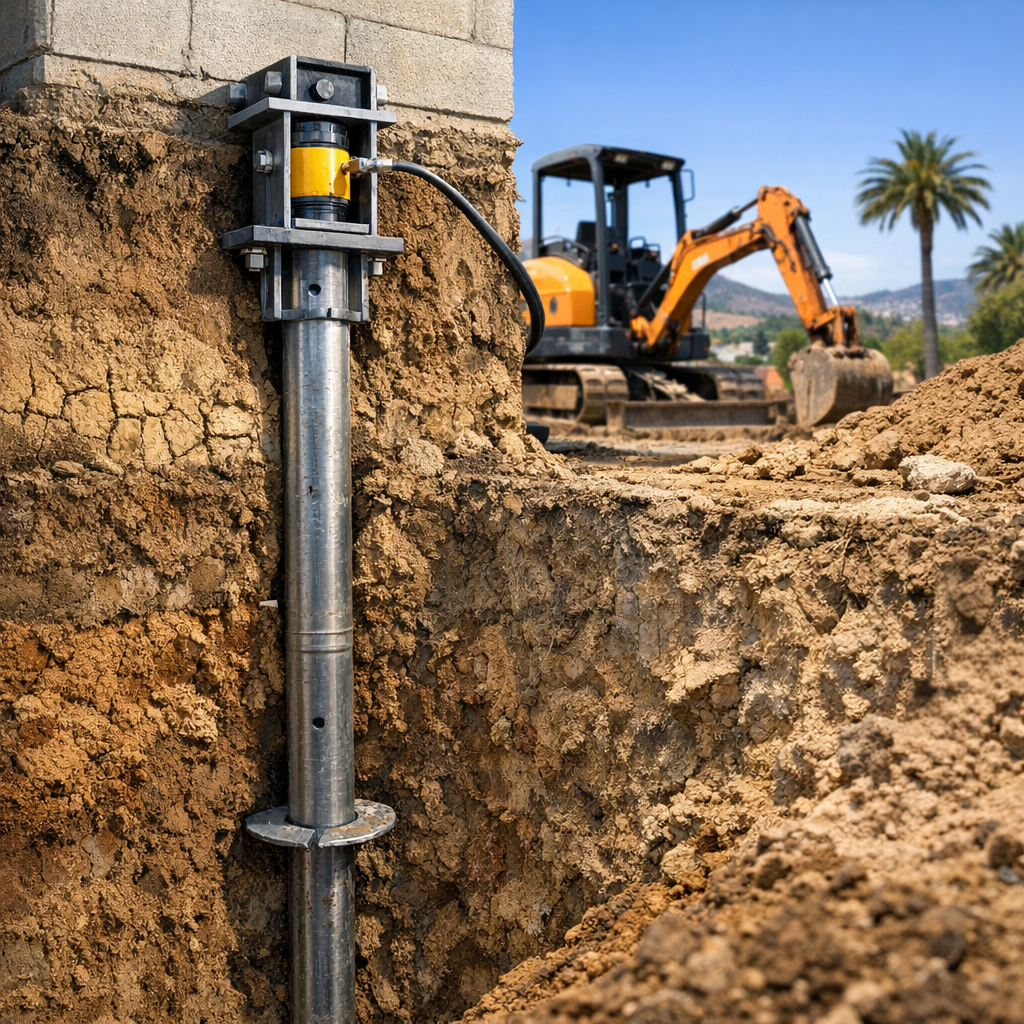
Hydraulically driven steel pier sections that advance until reaching refusal in dense soil layers. Push piers excel for foundation repair and structural post applications where existing foundation anchor points provide resistance for driving. Maximum depth typically 30-35 feet in San Diego County soil conditions.
Step 5: Obtain Building Permits and Review Pier Design
Submit complete building permit application including:
- Geotechnical report with soil investigation data
- Structural engineer stamped drawings showing pier placement, pier length, and grade beam connections
- Foundation pier specifications including concrete footing dimensions, pier cap details, and tie beam requirements
- Drainage system plans with French drain locations for moisture control
- Soil stabilization plans if chemical stabilization, lime treatment, or cement stabilization recommended
San Diego County building permit foundation piers review takes 2-4 weeks. Plan reviewers verify compliance with California Building Code Chapter 18 and verify that pier design criteria match geotechnical report recommendations.
Step 6: Install Piers to Exact Specifications
Pier foundation construction process San Diego follows strict sequencing:
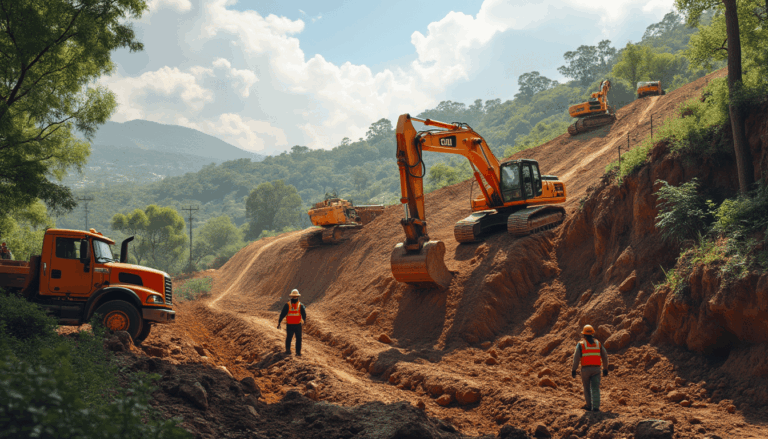
- Site preparation: Clear excavation areas, establish drainage away from work zones
- Drilling depth verification: Drill to specified depth, verify stable soil layer through resistance testing
- Pier reinforcement installation: Place rebar cage to structural engineer specifications
- Concrete placement: Pour concrete to eliminate voids, maintain concrete column integrity
- Curing period: Minimum 7 days before load application per ACI standards
- Grade beam construction: Connect piers with reinforced concrete grade beam or tie beam
- Foundation inspection: Required San Diego foundation pier inspection before concealing work
Installation timeframe: 1-3 weeks depending on site access, number of piers needed for foundation, and weather conditions.
Troubleshooting Common Foundation Pier Issues
If Pier Reaches Unexpected Soft Layer:
Problem: Drilling encounters low soil bearing capacity at predicted stable depth.
Solution: Continue drilling until reaching adequate bearing stratum. Structural engineer must approve extended pier length. Document actual drilling depth for building inspector.
If Water Table Encountered During Installation:
Problem: Groundwater enters pier excavation, affecting concrete strength.
Solution: Install temporary casing, pump water during concrete placement, or use tremie method for underwater concrete placement. Consider moisture barrier installation around finished pier.
If Adjacent Piers Show Differential Settlement:
Problem: Foundation movement continues after pier installation.
Solution: Verify all piers reached same bearing stratum. Install additional isolated pier between settling locations. Improve drainage system to reduce soil moisture infiltration.
If Soil Heave Occurs Post-Installation:
Problem: Foundation upheaval from swelling clay beneath shallow foundation elements.
Solution: Ensure void space beneath raised foundation or slab-on-grade. Consider post-tensioned slab or crawl space foundation alternatives. Implement moisture control with proper French drain systems.
Cost Factors for Foundation Piers in San Diego (2025)
Foundation pier installation cost San Diego varies by system:
- Drilled concrete piers: $150-$300 per linear foot (total cost: $3,000-$12,000 per pier)
- Helical piers: $125-$250 per linear foot (total cost: $3,000-$10,000 per pier)
- Push piers: $100-$200 per linear foot (total cost: $2,500-$8,000 per pier)
- Micropile systems: $200-$400 per linear foot for specialized applications
Additional costs include geotechnical report ($2,500-$5,000), structural engineering ($1,500-$3,500), and building permits ($500-$2,000).
Ongoing Maintenance and Monitoring
Foundation integrity requires regular monitoring:
- Annual inspections: Check for new foundation crack patterns indicating movement
- Drainage maintenance: Keep moisture barrier systems and French drains functional
- Soil moisture monitoring: Maintain consistent soil moisture around perimeter to minimize soil shrink-swell cycles
- Vegetation management: Control large tree roots that extract soil moisture, creating moisture variation
How long do foundation piers last San Diego? Properly installed concrete piers last 50-75 years. Steel piers (helical and push types) last 75-100 years with corrosion-resistant coatings. Foundation pier performance depends on initial installation quality and ongoing ground conditions maintenance.
Next Steps: Professional Resources
After determining proper pier depth and completing installation:
- Schedule final building inspection: Obtain approval before backfilling or concealing foundation work
- Document as-built conditions: Photograph actual pier depth, rebar placement, and concrete quality
- Establish maintenance schedule: Annual professional inspections recommended for first 5 years
- Monitor building support systems: Check load-bearing pier performance through interior floor level measurements
- Conduct environmental monitoring: For properties with potential contamination concerns, review how environmental soil sampling works to ensure soil conditions remain safe
Consult with best foundation contractor San Diego expansive soil specialists for site-specific recommendations. San Diego geotechnical engineer recommendations and structural engineer foundation design services provide ongoing support as soil conditions change over time. Proper pier and beam foundation depth, combined with effective moisture control and drainage systems, ensures long-term foundation stability in challenging San Diego soil conditions.